
Academic
DFT hydroponic system full strategy for increasing production: Yecai Xia Technology's six core
作者: 时间: 2026-08-31
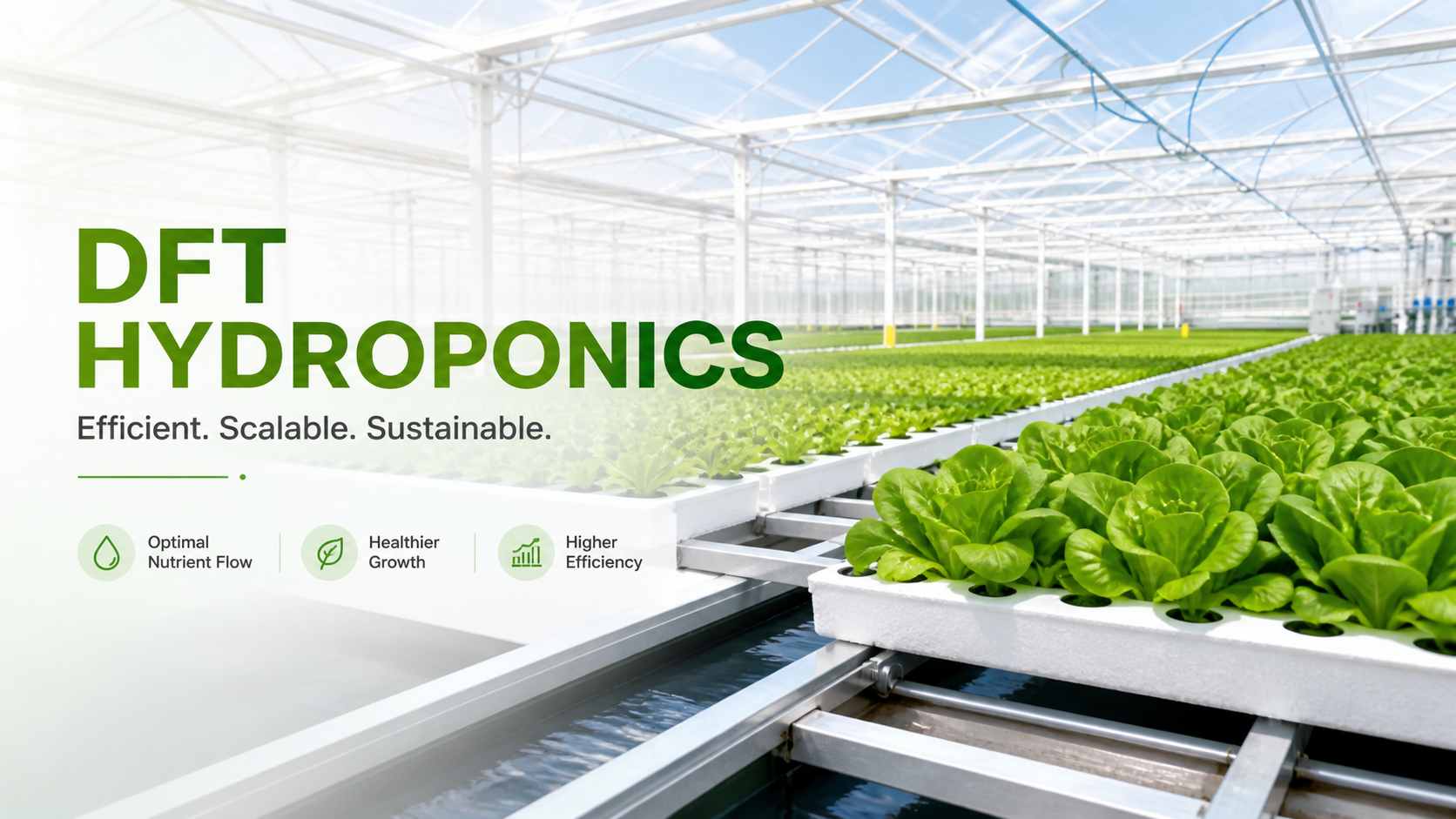
In DFT (deep flow) hydroponic systems, the installation of equipment and the placement of seedlings in the tank are only the first steps of the project. The true determinant of investment return is the annual output per unit area. Can we increase the number of lettuce crops from 6 to 8 per year? Can the single crop yield be increased from 15 kilograms per square meter to 20 kilograms? These increased production figures are directly converted into profits.
However, many DFT hydroponic growers have found in practice that although the equipment is good and the nutrient solution is prepared, the yield cannot increase. Thin leaves, slow growth, weak roots, and frequent root rot. Behind these problems, there is often a key link that has not been done properly.
As a member unit of the Facility Agriculture Association with 16 independent intellectual property rights and three major product lines of DFT/NFT/plant factories, LEAFYMAN Technology has provided planting system solutions to more than 400 professional planting companies worldwide, accumulating rich practical experience in increasing production. Today, we will systematically dismantle the yield increasing technology of DFT hydroponic system from six dimensions, helping you maximize the value of every inch of planting area.
1、 Dimension 1 of increased yield: Optimizing nutrient solution management - making crops "eat full and eat well"
Nutrient solution is the 'blood' of DFT hydroponic system. The scientific management of nutrient solution directly determines whether crops can obtain sufficient nutrient supply, and thus determines the yield ceiling.
1. Precise regulation of EC value
The optimal EC for lettuce is 1.4-1.8 mS/cm (vigorous growth period).
EC too low: Insufficient nutrients, yellowing of leaves, slow growth.
EC too high: salt stress, root damage, leaf edge burnout.
Yield increasing strategy: Adjust EC dynamically according to the growth stage. The seedling stage is 1.0-1.2, the vigorous stage is 1.5-1.8, and it should be appropriately reduced to 1.2-1.4 before harvesting to improve taste.
2. Optimize pH value
The optimal pH range is 5.8-6.2.
Excessive pH (>6.5): Trace elements such as iron, manganese, and zinc precipitate and cannot be absorbed, leading to iron deficiency yellowing and direct yield reduction.
Production strategy: Monitor pH daily, use dilute nitric acid or phosphoric acid to lower it, and use potassium hydroxide to increase it, ensuring that it is always in the optimal absorption range.
3. Ensure dissolved oxygen (DO)
Optimal dissolved oxygen (DO): ≥ 5 mg/L.
Low dissolved oxygen (<3 mg/L): Root hypoxia increases the risk of root rot, reduces absorption capacity, and sharply decreases yield.
Production strategy: During high temperatures in summer, use oxygen pumps or Venturi jets to increase dissolved oxygen; Reduce the liquid temperature (for every 1 ℃ decrease, the dissolved oxygen increases by about 0.2mg/L).
4. Yecaixia Technology Production Increase Plan
Provide customized nutrient solution formulas for different varieties and growth stages.
An automatic EC/pH adjustment system can be optionally selected to achieve 24-hour precise control and avoid human errors.
Equipped with a nutrient solution cooling module to ensure stable liquid temperature below 20 ℃ during hot seasons.
2、 Production Increase Dimension 2: Scientific Light Environment Regulation - Ensuring Every Leaf is' Full of Food and Light '
Light energy is the fuel for photosynthesis. In DFT hydroponic systems, insufficient light is the primary factor limiting yield, especially in winter and rainy weather.
1. Increase light intensity
When natural light is insufficient, use LED fill lights to increase the light intensity to 200-280 μ mol/m ²/s.
For every 10% increase in PPFD, the photosynthetic rate can be increased by approximately 8% -12% (within the appropriate range).
2. Optimize the spectral ratio
**Red light (660nm) * * accounts for 55% -65%, promoting biomass accumulation.
**Blue light (450nm) * * accounts for 20% -25%, promoting chlorophyll synthesis and preventing overgrowth.
**Green light (520nm) * * accounts for 5% -10%, penetrates the canopy, and promotes photosynthesis in lower leaves.
**Far red light (730nm) * * accounts for 3% -5%, promoting leaf extension and increasing leaf area.
3. Extend the photoperiod
The optimal photoperiod for leafy vegetables is 14-18 hours per day.
When natural light is insufficient in winter, extending the photoperiod to 16 hours through supplementary light can significantly increase yield.
4. Yecaixia Technology Production Increase Plan
Provide specialized spectral LED fill lights for leafy vegetables, with a light efficiency of ≥ 3.0 μ mol/J, energy-saving and efficient.
Support intelligent dimming, automatically adjust the supplementary light power according to natural light intensity, saving more than 30% energy.
Provide a multi-layer stereoscopic lighting solution to solve the chronic problem of insufficient lighting in the lower layer.
3、 Yield Increase Dimension Three: Optimizing Liquid Supply Strategy - Ensuring Smooth Breathing of Roots
Although the DFT system has strong buffering capacity in deep liquid layers, the supply strategy still affects the absorption efficiency of oxygen and nutrients by roots.
1. Adopt intermittent liquid supply
Although continuous liquid supply is stable, long-term soaking may lead to a decrease in root vitality.
Adopting an intermittent strategy of "supplying liquid for 30 minutes and stopping for 15 minutes" allows the roots to obtain more oxygen during the stopping period, promoting root development.
Research has shown that intermittent liquid supply can increase the root shoot ratio by 15% -20%, thereby promoting aboveground growth.
2. Optimize liquid level control
The liquid level of DFT system is generally controlled at 5-10 centimeters.
During the seedling stage, the liquid level can be slightly shallow (5-6 centimeters) to promote root growth downwards.
During the vigorous period, the liquid level can be slightly deeper (8-10 centimeters) to ensure sufficient water and nutrient supply.
3. Yecaixia Technology Production Increase Plan
Equipped with a dual pump redundant liquid supply system as standard, ensuring uninterrupted liquid supply.
Support VFD variable frequency speed regulation, flexibly adjust flow rate according to planting density and growth stage.
Optional intelligent liquid supply controller to achieve automatic switching of intermittent liquid supply mode.
However, many DFT hydroponic growers have found in practice that although the equipment is good and the nutrient solution is prepared, the yield cannot increase. Thin leaves, slow growth, weak roots, and frequent root rot. Behind these problems, there is often a key link that has not been done properly.
As a member unit of the Facility Agriculture Association with 16 independent intellectual property rights and three major product lines of DFT/NFT/plant factories, LEAFYMAN Technology has provided planting system solutions to more than 400 professional planting companies worldwide, accumulating rich practical experience in increasing production. Today, we will systematically dismantle the yield increasing technology of DFT hydroponic system from six dimensions, helping you maximize the value of every inch of planting area.
1、 Dimension 1 of increased yield: Optimizing nutrient solution management - making crops "eat full and eat well"
Nutrient solution is the 'blood' of DFT hydroponic system. The scientific management of nutrient solution directly determines whether crops can obtain sufficient nutrient supply, and thus determines the yield ceiling.
1. Precise regulation of EC value
The optimal EC for lettuce is 1.4-1.8 mS/cm (vigorous growth period).
EC too low: Insufficient nutrients, yellowing of leaves, slow growth.
EC too high: salt stress, root damage, leaf edge burnout.
Yield increasing strategy: Adjust EC dynamically according to the growth stage. The seedling stage is 1.0-1.2, the vigorous stage is 1.5-1.8, and it should be appropriately reduced to 1.2-1.4 before harvesting to improve taste.
2. Optimize pH value
The optimal pH range is 5.8-6.2.
Excessive pH (>6.5): Trace elements such as iron, manganese, and zinc precipitate and cannot be absorbed, leading to iron deficiency yellowing and direct yield reduction.
Production strategy: Monitor pH daily, use dilute nitric acid or phosphoric acid to lower it, and use potassium hydroxide to increase it, ensuring that it is always in the optimal absorption range.
3. Ensure dissolved oxygen (DO)
Optimal dissolved oxygen (DO): ≥ 5 mg/L.
Low dissolved oxygen (<3 mg/L): Root hypoxia increases the risk of root rot, reduces absorption capacity, and sharply decreases yield.
Production strategy: During high temperatures in summer, use oxygen pumps or Venturi jets to increase dissolved oxygen; Reduce the liquid temperature (for every 1 ℃ decrease, the dissolved oxygen increases by about 0.2mg/L).
4. Yecaixia Technology Production Increase Plan
Provide customized nutrient solution formulas for different varieties and growth stages.
An automatic EC/pH adjustment system can be optionally selected to achieve 24-hour precise control and avoid human errors.
Equipped with a nutrient solution cooling module to ensure stable liquid temperature below 20 ℃ during hot seasons.
2、 Production Increase Dimension 2: Scientific Light Environment Regulation - Ensuring Every Leaf is' Full of Food and Light '
Light energy is the fuel for photosynthesis. In DFT hydroponic systems, insufficient light is the primary factor limiting yield, especially in winter and rainy weather.
1. Increase light intensity
When natural light is insufficient, use LED fill lights to increase the light intensity to 200-280 μ mol/m ²/s.
For every 10% increase in PPFD, the photosynthetic rate can be increased by approximately 8% -12% (within the appropriate range).
2. Optimize the spectral ratio
**Red light (660nm) * * accounts for 55% -65%, promoting biomass accumulation.
**Blue light (450nm) * * accounts for 20% -25%, promoting chlorophyll synthesis and preventing overgrowth.
**Green light (520nm) * * accounts for 5% -10%, penetrates the canopy, and promotes photosynthesis in lower leaves.
**Far red light (730nm) * * accounts for 3% -5%, promoting leaf extension and increasing leaf area.
3. Extend the photoperiod
The optimal photoperiod for leafy vegetables is 14-18 hours per day.
When natural light is insufficient in winter, extending the photoperiod to 16 hours through supplementary light can significantly increase yield.
4. Yecaixia Technology Production Increase Plan
Provide specialized spectral LED fill lights for leafy vegetables, with a light efficiency of ≥ 3.0 μ mol/J, energy-saving and efficient.
Support intelligent dimming, automatically adjust the supplementary light power according to natural light intensity, saving more than 30% energy.
Provide a multi-layer stereoscopic lighting solution to solve the chronic problem of insufficient lighting in the lower layer.
3、 Yield Increase Dimension Three: Optimizing Liquid Supply Strategy - Ensuring Smooth Breathing of Roots
Although the DFT system has strong buffering capacity in deep liquid layers, the supply strategy still affects the absorption efficiency of oxygen and nutrients by roots.
1. Adopt intermittent liquid supply
Although continuous liquid supply is stable, long-term soaking may lead to a decrease in root vitality.
Adopting an intermittent strategy of "supplying liquid for 30 minutes and stopping for 15 minutes" allows the roots to obtain more oxygen during the stopping period, promoting root development.
Research has shown that intermittent liquid supply can increase the root shoot ratio by 15% -20%, thereby promoting aboveground growth.
2. Optimize liquid level control
The liquid level of DFT system is generally controlled at 5-10 centimeters.
During the seedling stage, the liquid level can be slightly shallow (5-6 centimeters) to promote root growth downwards.
During the vigorous period, the liquid level can be slightly deeper (8-10 centimeters) to ensure sufficient water and nutrient supply.
3. Yecaixia Technology Production Increase Plan
Equipped with a dual pump redundant liquid supply system as standard, ensuring uninterrupted liquid supply.
Support VFD variable frequency speed regulation, flexibly adjust flow rate according to planting density and growth stage.
Optional intelligent liquid supply controller to achieve automatic switching of intermittent liquid supply mode.