
Academic
NFT hydroponic system nutrient solution full guide: Ye Cai Xia Technology decrypts the "soul fo
作者: 时间: 2026-08-25
In NFT (Nutrient Liquid Membrane Technology) hydroponic systems, nutrient solution carries the core function of transporting water, nutrients, and oxygen to crops. It does not have strong buffering capacity like soil, but directly determines the growth rate, quality, and yield of crops.
It can be said that the formulation and management of nutrient solutions are the key watershed for the success or failure of NFT hydroponic projects.
Mismatched, slow crop growth, yellowing of leaves, and root rot; Once prepared, the leafy vegetables have a shortened growth cycle, bright color, and a crispy and sweet taste, selling at double the high price.
As a member unit of the Facility Agriculture Association with 16 independent intellectual property rights and three major product lines of DFT/NFT/plant factories, LEAFYMAN Technology has been deeply involved in the field of nutrient solution technology for many years, establishing a nutrient solution formula database covering more than 20 leafy vegetable crops and accumulating rich practical experience for different climates and water sources. Today, we will systematically dismantle all the core knowledge of NFT hydroponic system nutrient solution for you.
1、 What are the differences between NFT system nutrient solution and DFT?
Before explaining the specific formula, we first need to understand the special requirements that NFT systems have for nutrient solutions.
Comparison Dimension DFT Hydroponic System NFT Hydroponic System
The total amount of nutrient solution is large (deep liquid layer) and extremely small (shallow liquid film)
Strong buffering capacity, slow and weak parameter fluctuations, fast parameter fluctuations
Root contact method: fully immersed in liquid film contact+partially exposed to air
The oxygen supply mainly relies on the dual supply of dissolved oxygen film and air
Formula adjustment response is slow (several hours) and fast (minute level)
The requirement for management precision is moderate to high
Core conclusion: The nutrient management of NFT systems requires higher monitoring frequency and more precise regulation capabilities, but at the same time, it also provides opportunities for growers to respond to crop demands more quickly.
2、 Core components of NFT hydroponic nutrient solution: 13 essential nutrients
Plant growth requires 16 essential nutrients, of which 13 are supplied through nutrient solutions (the other 3 carbon, hydrogen, and oxygen come from air and water).
A large number of elements (with high demand)
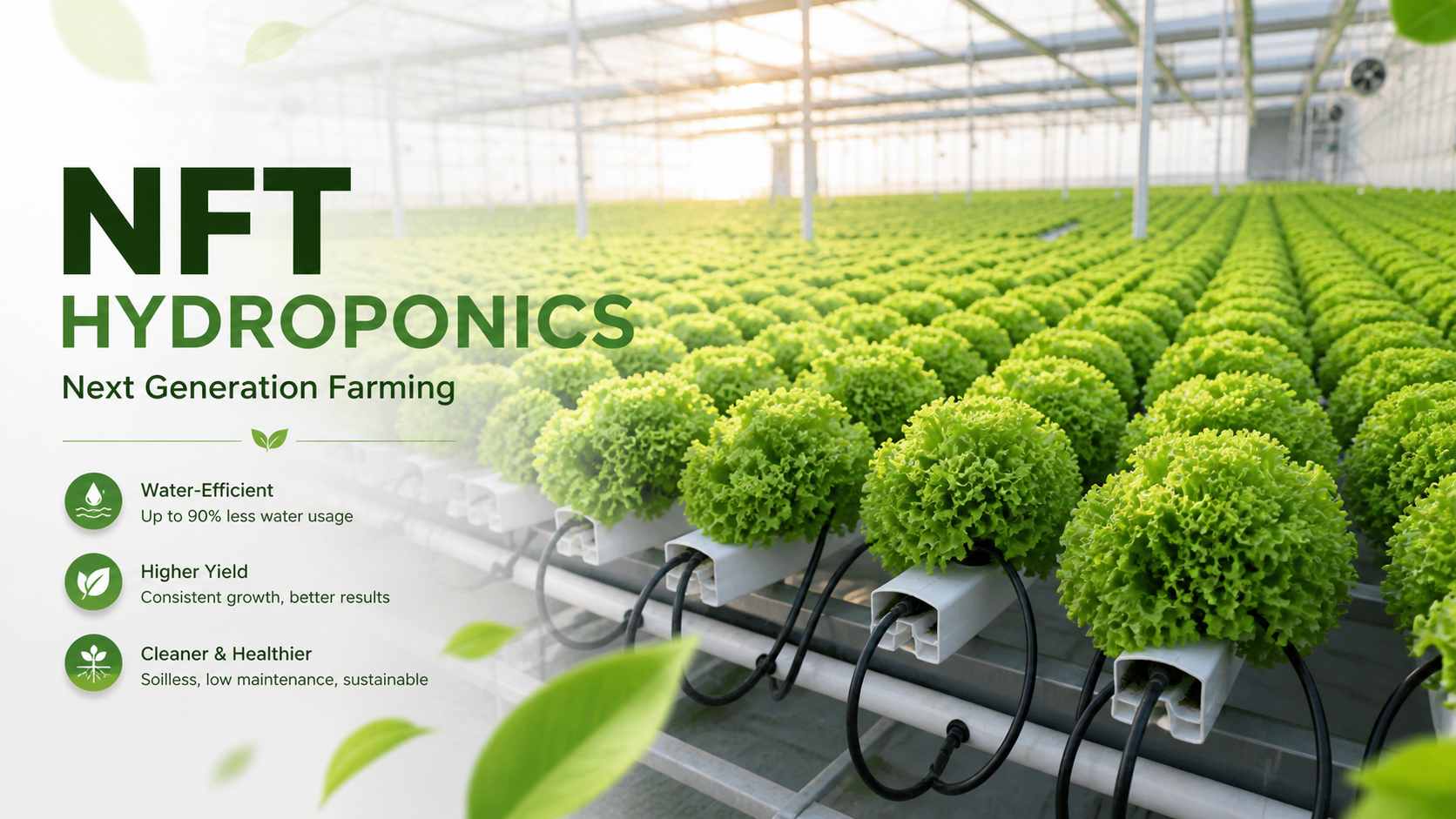
Nitrogen (N): Promotes leaf growth, and leafy vegetables require the highest amount of nitrogen. Recommended concentration: 150-200 ppm
Phosphorus (P): Promotes root development and energy metabolism. Recommended concentration: 30-50 ppm
Potassium (K): enhances stress resistance and improves quality. Recommended concentration: 200-300 ppm
Calcium (Ca): promotes cell wall formation, prevents leaf cracking and apical necrosis. Recommended concentration: 100-150 ppm
Magnesium (Mg): a core component of chlorophyll. Recommended concentration: 30-50 ppm
Sulfur (S): participates in protein synthesis. Recommended concentration: 50-80 ppm
Trace elements (with low demand but indispensable)
Iron (Fe): Preventing yellowing leaves, leafy vegetables are the favorite. Recommended concentration: 2-5 ppm
Manganese (Mn): Promotes photosynthesis. Recommended concentration: 0.5-1 ppm
Zinc (Zn): Essential for auxin synthesis. Recommended concentration: 0.05-0.5 ppm
Copper (Cu): participates in the enzyme system. Recommended concentration: 0.02-0.1 ppm
Molybdenum (Mo): Essential for nitrogen metabolism. Recommended concentration: 0.01-0.05 ppm
Boron (B): Promotes meristematic growth. Recommended concentration: 0.3-0.5 ppm
Chlorine (Cl): participates in permeation regulation. Recommended concentration: trace amount is sufficient
3、 Core parameters and control methods of NFT hydroponic nutrient solution
1. EC (Conductivity) - Total Concentration Index
Definition: Measure the total salt concentration of nutrient solution.
The optimal range is 1.2-1.8 mS/cm for leafy vegetables.
Seedling stage: 1.0-1.2 mS/cm (avoid burning seedlings).
Vigorous growth period: 1.5-1.8 mS/cm (promotes high yield).
Excessive harm: Leaf edges are scorched and withered, root systems are damaged, and growth is hindered.
Low risk: yellowing of leaves, thinning of plants, and decreased yield.
Regulation method: Supplement concentrated fertilizer solution when EC is low; Dilute with water when EC is high.
2. pH value - the "switch" for nutrient absorption
Optimal range: 5.8-6.2.
Above 6.5: Trace elements such as iron, manganese, zinc, and boron precipitate and cannot be absorbed; Leaves exhibit iron deficiency yellowing.
Below 5.5: Root damage, hindered absorption of calcium and magnesium; Possible top blight caused by calcium deficiency.
Regulation method: When the pH is too high, use dilute nitric acid or phosphoric acid to lower it; When the pH is low, use potassium hydroxide to increase it.
Suggestion from Ye Caixia Technology: Install an automatic pH adjustment system to significantly reduce manual intervention and ensure parameter stability.
3. Dissolved oxygen (DO) - the key to root respiration
Optimal value: ≥ 5 mg/L.
Below 3 mg/L: Root hypoxia, easy root rot, and disease outbreak.
Improvement methods:
Increase the circulation flow rate and velocity of nutrient solution (advantages of NFT system itself).
Reduce liquid temperature (for every 1 ℃ decrease, dissolved oxygen increases by approximately 0.2 mg/L).
Use an oxygenation pump or a Venturi jet injector.
Yecai Xia Technology Solution: In hot seasons, it is recommended to use an oxygen pump or nutrient solution cooling unit to ensure sufficient dissolved oxygen.
4. Liquid temperature - the "body temperature" of the root system
Optimal range: 15-20 ℃.
Exceeding 25 ℃: Dissolved oxygen decreases, root vitality decreases, and the risk of root rot increases.
Below 12 ℃: Slow root metabolism, hindered absorption of phosphorus and calcium.
Yecai Xia Technology Solution: Equipped with nutrient solution temperature regulation equipment, cooling in summer and heating in winter to ensure stable liquid temperature throughout the year.
It can be said that the formulation and management of nutrient solutions are the key watershed for the success or failure of NFT hydroponic projects.
Mismatched, slow crop growth, yellowing of leaves, and root rot; Once prepared, the leafy vegetables have a shortened growth cycle, bright color, and a crispy and sweet taste, selling at double the high price.
As a member unit of the Facility Agriculture Association with 16 independent intellectual property rights and three major product lines of DFT/NFT/plant factories, LEAFYMAN Technology has been deeply involved in the field of nutrient solution technology for many years, establishing a nutrient solution formula database covering more than 20 leafy vegetable crops and accumulating rich practical experience for different climates and water sources. Today, we will systematically dismantle all the core knowledge of NFT hydroponic system nutrient solution for you.
1、 What are the differences between NFT system nutrient solution and DFT?
Before explaining the specific formula, we first need to understand the special requirements that NFT systems have for nutrient solutions.
Comparison Dimension DFT Hydroponic System NFT Hydroponic System
The total amount of nutrient solution is large (deep liquid layer) and extremely small (shallow liquid film)
Strong buffering capacity, slow and weak parameter fluctuations, fast parameter fluctuations
Root contact method: fully immersed in liquid film contact+partially exposed to air
The oxygen supply mainly relies on the dual supply of dissolved oxygen film and air
Formula adjustment response is slow (several hours) and fast (minute level)
The requirement for management precision is moderate to high
Core conclusion: The nutrient management of NFT systems requires higher monitoring frequency and more precise regulation capabilities, but at the same time, it also provides opportunities for growers to respond to crop demands more quickly.
2、 Core components of NFT hydroponic nutrient solution: 13 essential nutrients
Plant growth requires 16 essential nutrients, of which 13 are supplied through nutrient solutions (the other 3 carbon, hydrogen, and oxygen come from air and water).
A large number of elements (with high demand)
Nitrogen (N): Promotes leaf growth, and leafy vegetables require the highest amount of nitrogen. Recommended concentration: 150-200 ppm
Phosphorus (P): Promotes root development and energy metabolism. Recommended concentration: 30-50 ppm
Potassium (K): enhances stress resistance and improves quality. Recommended concentration: 200-300 ppm
Calcium (Ca): promotes cell wall formation, prevents leaf cracking and apical necrosis. Recommended concentration: 100-150 ppm
Magnesium (Mg): a core component of chlorophyll. Recommended concentration: 30-50 ppm
Sulfur (S): participates in protein synthesis. Recommended concentration: 50-80 ppm
Trace elements (with low demand but indispensable)
Iron (Fe): Preventing yellowing leaves, leafy vegetables are the favorite. Recommended concentration: 2-5 ppm
Manganese (Mn): Promotes photosynthesis. Recommended concentration: 0.5-1 ppm
Zinc (Zn): Essential for auxin synthesis. Recommended concentration: 0.05-0.5 ppm
Copper (Cu): participates in the enzyme system. Recommended concentration: 0.02-0.1 ppm
Molybdenum (Mo): Essential for nitrogen metabolism. Recommended concentration: 0.01-0.05 ppm
Boron (B): Promotes meristematic growth. Recommended concentration: 0.3-0.5 ppm
Chlorine (Cl): participates in permeation regulation. Recommended concentration: trace amount is sufficient
3、 Core parameters and control methods of NFT hydroponic nutrient solution
1. EC (Conductivity) - Total Concentration Index
Definition: Measure the total salt concentration of nutrient solution.
The optimal range is 1.2-1.8 mS/cm for leafy vegetables.
Seedling stage: 1.0-1.2 mS/cm (avoid burning seedlings).
Vigorous growth period: 1.5-1.8 mS/cm (promotes high yield).
Excessive harm: Leaf edges are scorched and withered, root systems are damaged, and growth is hindered.
Low risk: yellowing of leaves, thinning of plants, and decreased yield.
Regulation method: Supplement concentrated fertilizer solution when EC is low; Dilute with water when EC is high.
2. pH value - the "switch" for nutrient absorption
Optimal range: 5.8-6.2.
Above 6.5: Trace elements such as iron, manganese, zinc, and boron precipitate and cannot be absorbed; Leaves exhibit iron deficiency yellowing.
Below 5.5: Root damage, hindered absorption of calcium and magnesium; Possible top blight caused by calcium deficiency.
Regulation method: When the pH is too high, use dilute nitric acid or phosphoric acid to lower it; When the pH is low, use potassium hydroxide to increase it.
Suggestion from Ye Caixia Technology: Install an automatic pH adjustment system to significantly reduce manual intervention and ensure parameter stability.
3. Dissolved oxygen (DO) - the key to root respiration
Optimal value: ≥ 5 mg/L.
Below 3 mg/L: Root hypoxia, easy root rot, and disease outbreak.
Improvement methods:
Increase the circulation flow rate and velocity of nutrient solution (advantages of NFT system itself).
Reduce liquid temperature (for every 1 ℃ decrease, dissolved oxygen increases by approximately 0.2 mg/L).
Use an oxygenation pump or a Venturi jet injector.
Yecai Xia Technology Solution: In hot seasons, it is recommended to use an oxygen pump or nutrient solution cooling unit to ensure sufficient dissolved oxygen.
4. Liquid temperature - the "body temperature" of the root system
Optimal range: 15-20 ℃.
Exceeding 25 ℃: Dissolved oxygen decreases, root vitality decreases, and the risk of root rot increases.
Below 12 ℃: Slow root metabolism, hindered absorption of phosphorus and calcium.
Yecai Xia Technology Solution: Equipped with nutrient solution temperature regulation equipment, cooling in summer and heating in winter to ensure stable liquid temperature throughout the year.