
Academic
Full analysis of NFT hydroponic system liquid supply method: Yecai Xia Technology's precise liq
作者: 时间: 2026-08-24
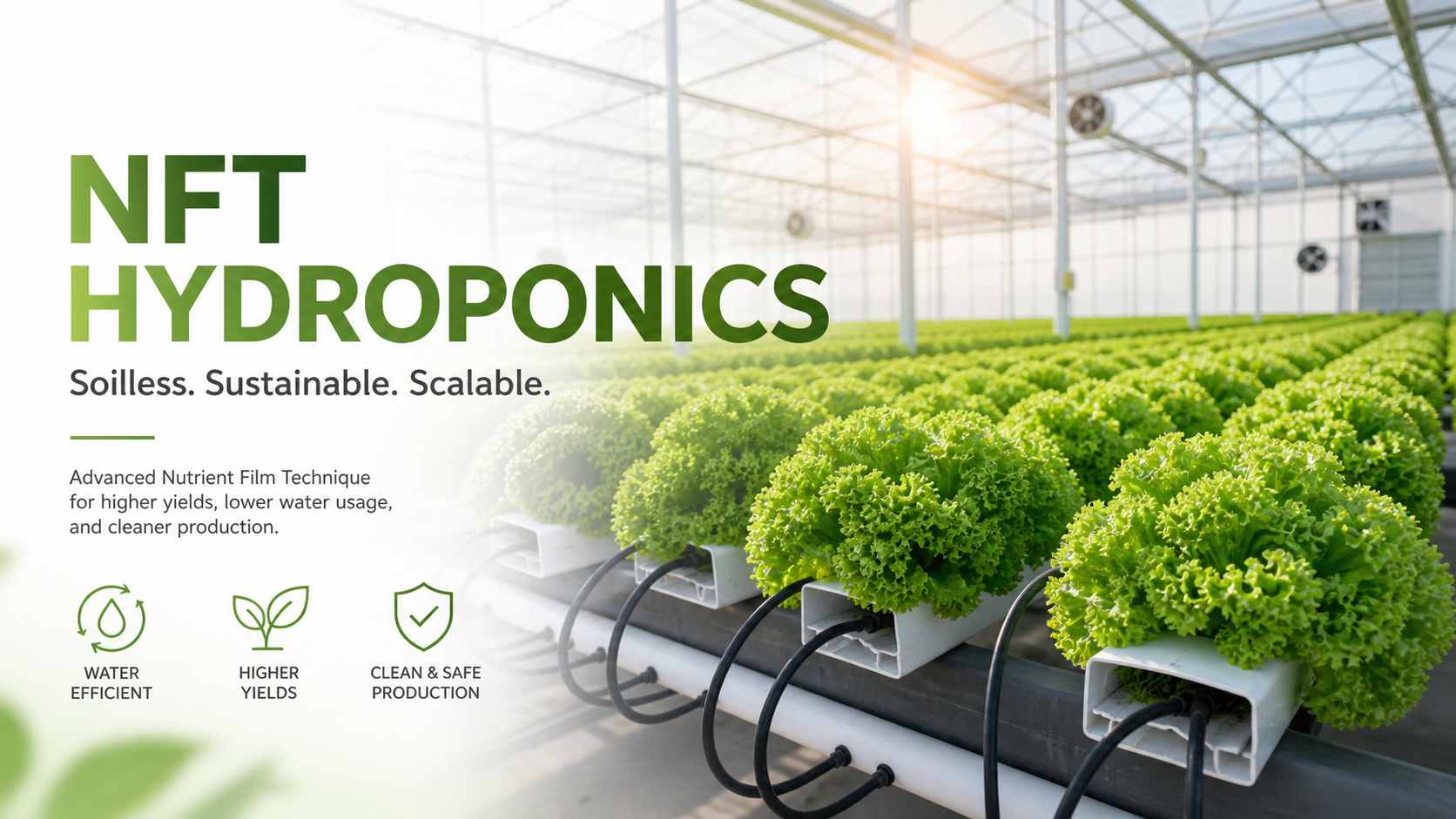
In NFT (Nutrient Liquid Membrane Technology) hydroponic systems, nutrient solution is driven by a water pump to form an extremely thin liquid film in an inclined pipeline, continuously flowing through the plant roots to provide water, nutrients, and oxygen for crops.
This description may sound simple, but in actual production, the choice and design of liquid supply methods directly determine the growth rate, root health, system energy consumption, and final yield and quality of crops.
Excessive liquid supply can cause the roots to be soaked in water for a long time, leading to hypoxia and root rot; If the liquid supply is too small, it may cause interruption of flow and dry root system. Inappropriate liquid supply frequency can also affect the nutrient absorption efficiency of crops.
As a member unit of the Facility Agriculture Association with 16 independent intellectual property rights and three major product lines of DFT/NFT/plant factories, LEAFYMAN Technology has accumulated profound research and development strength and practical experience in the liquid supply technology of NFT hydroponic systems. Today, we will systematically dismantle the liquid supply method of NFT hydroponic systems to help you understand how this' invisible technology 'determines the success or failure of planting.
1、 Basic principles of NFT hydroponic system liquid supply
The liquid supply system of NFT hydroponic system is essentially a "closed loop loop":
Liquid storage tank: stores the prepared nutrient solution.
Water pump: Lift the nutrient solution from the storage tank to the main supply pipe.
Supply Supervisor: Distribute nutrient solution to each planting pipeline.
Planting pipeline: The nutrient solution forms a liquid film in the inclined pipeline and flows through the crop roots.
Reflux pipeline: Nutrient solution flows out from the end of the pipeline and collects in the main reflux pipeline.
Storage tank: The nutrient solution flows back to the storage tank, completing one cycle.
In this cycle, the supply method determines the form, frequency, and flow rate of nutrient solution provided to crop roots.
2、 Three major liquid supply methods for NFT hydroponic systems
According to different liquid supply strategies, NFT hydroponic systems are mainly divided into the following three liquid supply methods.
Method 1: Continuous Flow
Working principle: The water pump runs continuously for 24 hours, and the nutrient solution continues to circulate in the pipeline.
Advantages:
The liquid film remains stable, and the root system is always in the optimal water and gas environment.
Simple management, no need to control devices on a regular basis.
Suitable for leafy vegetables with fast growth rates such as lettuce.
Disadvantages:
High energy consumption (continuous operation of water pump).
Long term continuous liquid supply may lead to root laziness, excessive dependence on water flow, and decreased root vitality.
In the low temperature season, continuous flow may lower liquid temperature and affect root absorption.
Applicable scenarios: large-scale commercial production, lettuce growing at a constant rate, and bases with stable power supply.
Method 2: Intermittent Flow/Pulse Flow
Working principle: The water pump operates and stops alternately according to a set time cycle, such as "supply liquid for 15 minutes, stop for 5 minutes".
Advantages:
Stronger root development: During the intermittent period of liquid supply, the root system is completely exposed to the air, obtaining sufficient oxygen, which promotes active growth and search for water, resulting in a more developed root system.
Significant energy savings: the running time of the water pump is reduced by 30% -50%, and electricity costs are significantly reduced.
Reduce the risk of root rot: Avoid long-term soaking of the root system, effectively reducing the incidence of root rot.
More stable liquid temperature: During the intermittent period, air circulation in the pipeline helps regulate the rhizosphere temperature.
Disadvantages:
A timed controller or intelligent control system is required.
An excessively long intermittent period of liquid supply may lead to root water shortage, and it is necessary to accurately set the ratio of liquid supply/stoppage.
Applicable scenarios: Pursuing high-quality leafy vegetables, energy conservation and consumption reduction needs, high temperature areas in summer, plant factories, etc.
Method 3: Differentiated Fluid Supply (Variable Flow/Diurnal Flow)
Working principle: Dynamically adjust the supply frequency and flow rate based on factors such as crop growth stage, circadian rhythm, and light intensity.
Yecai Xia Technology Intelligent Liquid Supply Strategy:
During the day: sufficient sunlight, strong transpiration, and high frequency of liquid supply (such as 15 minutes of liquid supply/5-minute stoppage).
At night: transpiration decreases, and the frequency of liquid supply decreases (such as supplying liquid for 10 minutes/stopping for 15 minutes).
Seedling stage: shallow root system, low water demand, and appropriate reduction in liquid supply.
Prosperous growth period: requiring a large amount of water, increasing the frequency and flow rate of liquid supply.
High temperature weather: Increase the frequency of liquid supply, reduce liquid temperature, and replenish water.
Rainy weather: Reduce the frequency of liquid supply to prevent excessive humidity.
Advantages:
The most scientific and accurate liquid supply method ensures the optimal growth environment for crops.
The best energy-saving effect, truly achieving "on-demand liquid supply".
The highest yield and quality, robust root system, and thick leaves.
Disadvantages:
Intelligent control system and sensors need to be configured.
The initial investment is relatively high, but the long-term return is greater.
Applicable scenarios: high-end leafy vegetable production, plant factories, commercial planting bases that pursue maximum quality and efficiency.
This description may sound simple, but in actual production, the choice and design of liquid supply methods directly determine the growth rate, root health, system energy consumption, and final yield and quality of crops.
Excessive liquid supply can cause the roots to be soaked in water for a long time, leading to hypoxia and root rot; If the liquid supply is too small, it may cause interruption of flow and dry root system. Inappropriate liquid supply frequency can also affect the nutrient absorption efficiency of crops.
As a member unit of the Facility Agriculture Association with 16 independent intellectual property rights and three major product lines of DFT/NFT/plant factories, LEAFYMAN Technology has accumulated profound research and development strength and practical experience in the liquid supply technology of NFT hydroponic systems. Today, we will systematically dismantle the liquid supply method of NFT hydroponic systems to help you understand how this' invisible technology 'determines the success or failure of planting.
1、 Basic principles of NFT hydroponic system liquid supply
The liquid supply system of NFT hydroponic system is essentially a "closed loop loop":
Liquid storage tank: stores the prepared nutrient solution.
Water pump: Lift the nutrient solution from the storage tank to the main supply pipe.
Supply Supervisor: Distribute nutrient solution to each planting pipeline.
Planting pipeline: The nutrient solution forms a liquid film in the inclined pipeline and flows through the crop roots.
Reflux pipeline: Nutrient solution flows out from the end of the pipeline and collects in the main reflux pipeline.
Storage tank: The nutrient solution flows back to the storage tank, completing one cycle.
In this cycle, the supply method determines the form, frequency, and flow rate of nutrient solution provided to crop roots.
2、 Three major liquid supply methods for NFT hydroponic systems
According to different liquid supply strategies, NFT hydroponic systems are mainly divided into the following three liquid supply methods.
Method 1: Continuous Flow
Working principle: The water pump runs continuously for 24 hours, and the nutrient solution continues to circulate in the pipeline.
Advantages:
The liquid film remains stable, and the root system is always in the optimal water and gas environment.
Simple management, no need to control devices on a regular basis.
Suitable for leafy vegetables with fast growth rates such as lettuce.
Disadvantages:
High energy consumption (continuous operation of water pump).
Long term continuous liquid supply may lead to root laziness, excessive dependence on water flow, and decreased root vitality.
In the low temperature season, continuous flow may lower liquid temperature and affect root absorption.
Applicable scenarios: large-scale commercial production, lettuce growing at a constant rate, and bases with stable power supply.
Method 2: Intermittent Flow/Pulse Flow
Working principle: The water pump operates and stops alternately according to a set time cycle, such as "supply liquid for 15 minutes, stop for 5 minutes".
Advantages:
Stronger root development: During the intermittent period of liquid supply, the root system is completely exposed to the air, obtaining sufficient oxygen, which promotes active growth and search for water, resulting in a more developed root system.
Significant energy savings: the running time of the water pump is reduced by 30% -50%, and electricity costs are significantly reduced.
Reduce the risk of root rot: Avoid long-term soaking of the root system, effectively reducing the incidence of root rot.
More stable liquid temperature: During the intermittent period, air circulation in the pipeline helps regulate the rhizosphere temperature.
Disadvantages:
A timed controller or intelligent control system is required.
An excessively long intermittent period of liquid supply may lead to root water shortage, and it is necessary to accurately set the ratio of liquid supply/stoppage.
Applicable scenarios: Pursuing high-quality leafy vegetables, energy conservation and consumption reduction needs, high temperature areas in summer, plant factories, etc.
Method 3: Differentiated Fluid Supply (Variable Flow/Diurnal Flow)
Working principle: Dynamically adjust the supply frequency and flow rate based on factors such as crop growth stage, circadian rhythm, and light intensity.
Yecai Xia Technology Intelligent Liquid Supply Strategy:
During the day: sufficient sunlight, strong transpiration, and high frequency of liquid supply (such as 15 minutes of liquid supply/5-minute stoppage).
At night: transpiration decreases, and the frequency of liquid supply decreases (such as supplying liquid for 10 minutes/stopping for 15 minutes).
Seedling stage: shallow root system, low water demand, and appropriate reduction in liquid supply.
Prosperous growth period: requiring a large amount of water, increasing the frequency and flow rate of liquid supply.
High temperature weather: Increase the frequency of liquid supply, reduce liquid temperature, and replenish water.
Rainy weather: Reduce the frequency of liquid supply to prevent excessive humidity.
Advantages:
The most scientific and accurate liquid supply method ensures the optimal growth environment for crops.
The best energy-saving effect, truly achieving "on-demand liquid supply".
The highest yield and quality, robust root system, and thick leaves.
Disadvantages:
Intelligent control system and sensors need to be configured.
The initial investment is relatively high, but the long-term return is greater.
Applicable scenarios: high-end leafy vegetable production, plant factories, commercial planting bases that pursue maximum quality and efficiency.