
Academic
Comprehensive Analysis of the Investment Value of DFT Hydroponic System: Yecai Xia Technology Helps
作者: 时间: 2026-08-19
In recent years, "facility agriculture," "plant factories," and "hydroponic vegetables" have become high-frequency buzzwords in the agricultural field. More and more social capital, traditional growers, and even cross-border investors are turning their attention to DFT hydroponic systems. This seemingly sophisticated system has indeed demonstrated strong profitability in terms of food safety, land use efficiency, and off-season supply.
But any investment carries risks. Is the upfront investment of DFT hydroponic system higher than traditional soil cultivation worth the money? How long can we recoup our investment? What is the annualized rate of return? How to avoid the embarrassment of "equipment affordable but unable to grow vegetables"?
As a member unit of the Facility Agriculture Association, which has 16 independent intellectual property rights and has continuously provided planting system solutions for more than 400 professional planting companies worldwide, LEAFYMAN Technology will not delve into mysticism today, but only use industry data and practical experience to deeply analyze the "addition, subtraction, multiplication, and division" of DFT hydroponic system investment, helping you see how every penny here is spent and how it is earned back.
1、 The investment prospects of DFT hydroponic systems: why is it worth investing heavily?
1. Market demand: Leafy vegetables such as lettuce and spinach have stable high prices throughout the year
Traditional soil cultivated leafy vegetables are greatly affected by seasons, with a sharp decrease in supply and soaring prices during high temperatures in summer or severe cold in winter. The DFT hydroponic system can achieve annual continuous production in greenhouses or plant factories, and off-season leafy vegetables often enjoy extremely high premiums without worrying about sales.
2. Policy Dongfeng: The country vigorously supports facility agriculture
From the No. 1 central document to local supporting subsidies, facility agriculture and smart agriculture are clear policy support directions. In the national level agricultural comprehensive reform pilot zone in Shandong Province, settled enterprises and supporting projects will also enjoy more policy dividends and project support.
3. Quality premium: Clean and pesticide residue free is the core competitiveness
Contemporary consumers are willing to pay a high premium for "safety, cleanliness, and freshness". Hydroponic leafy vegetables are free from soil and pesticide residues, and require no washing before being sold directly to supermarkets. The purchase price is 30% -100% higher than ordinary vegetables, and there is a shortage of supply.
2、 Cost breakdown of investment: Where is the money spent? (Based on a 10000 square meter connected greenhouse as a reference)
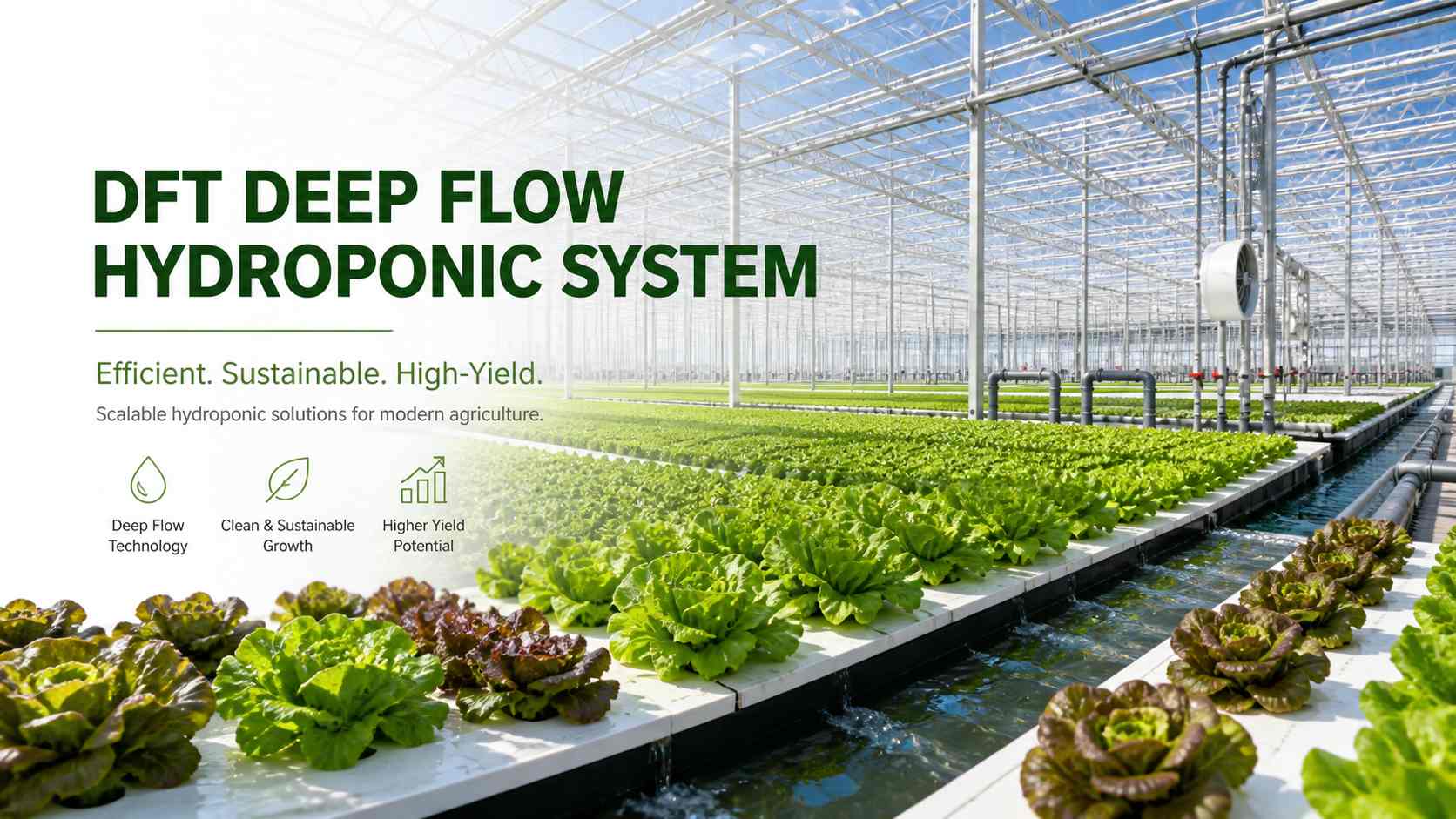
Investing in DFT hydroponic projects, the initial capital is mainly divided into five major sectors. Yecai Xia Technology has compiled a true "economic account" for you:
1. Infrastructure (greenhouse/greenhouse)
Proportion: Approximately 40% -50%
Details: The cost of a multi story glass greenhouse is about 300-500 yuan/square meter, while a solar greenhouse is relatively cheaper. This is a hard cost that primarily determines your ability to withstand natural disasters.
2. Core equipment of DFT hydroponic system
Proportion: Approximately 25% -30%
Details: including planting tank body, nutrient solution circulation system, control system, planting plate, etc. This is the easiest place to "step on a hole".
Low price assembly system: Although it may seem cheap, the flow channel design is unreasonable, the material is not corrosion-resistant, and it takes 3-5 years for major repairs, which actually makes it more expensive.
Technical manufacturers (such as Ye Cai Xia Technology): The system design is scientific, the materials are resistant to aging, the service life is over 10 years, and the long-term dilution cost is lower.
3. Installation and matching
Proportion: Approximately 10% -15%
Details: Water circuit renovation, reservoir, filtration system, installation of automation control cabinet, etc.
4. The first batch of production materials
Proportion: Approximately 5%
Details: Seeds, seedling sponge, nutrient solution raw materials, prepayment of water and electricity fees.
5. Technical and manual reserves
Proportion: Approximately 5% -10%
Details: Technician salary, basic planting training fees. This money cannot be saved, a hydroponic base without technical support is just burning money.
3、 Profit Analysis: The Profit Making Logic of DFT Hydroponic System
1. Production account: Multiple planting index compaction soil cultivation
Taking cream lettuce as an example:
Traditional soil cultivation: planting 4-5 crops a year, yielding about 4-6 tons per mu.
DFT hydroponics (Yecai Xia Technology solution): stable planting of 8-10 crops per year (equivalent to an annual output of about 150-200kg per square meter), and more land saving. Stereoscopic planting can further increase output value by 3-5 times.
2. Price account: high premium for off-season and high-quality products
Hydroponic leafy vegetables, due to their good appearance, no need for washing, and no pesticide residue, usually have an average selling price of 1.5-2 times that of ordinary soil cultivated leafy vegetables. During off-season periods (such as severe winter or summer), prices can reach more than three times the price of regular vegetables.
3. Cost accounting: Saving water and fertilizer, what is saved is earned
Water fee: A closed loop system can save 70% -80% of water usage.
Fertilizer: Accurate supply of fertilizer, with a utilization rate of over 90%, far exceeding the extensive use of fertilizer in the market.
Artificial: Water and fertilizer integration+labor-saving design can reduce manual operation time by more than 50%, directly saving management costs.
4. Investment return cycle (real industry measurement)
Based on the experience data of Yecai Xia Technology's global 400+projects:
Conventional mode (plane planting): under the premise of normal management and stable channels, it is estimated that all fixed assets investment can be recovered in 1.5-2.5 years.
Optimization mode (three-dimensional planting+high-end varieties): If a multi-layer DFT system is used to plant high-value varieties such as ice vegetables and purple leaf lettuce, the return cycle is expected to be compressed to less than 1 year.
But any investment carries risks. Is the upfront investment of DFT hydroponic system higher than traditional soil cultivation worth the money? How long can we recoup our investment? What is the annualized rate of return? How to avoid the embarrassment of "equipment affordable but unable to grow vegetables"?
As a member unit of the Facility Agriculture Association, which has 16 independent intellectual property rights and has continuously provided planting system solutions for more than 400 professional planting companies worldwide, LEAFYMAN Technology will not delve into mysticism today, but only use industry data and practical experience to deeply analyze the "addition, subtraction, multiplication, and division" of DFT hydroponic system investment, helping you see how every penny here is spent and how it is earned back.
1、 The investment prospects of DFT hydroponic systems: why is it worth investing heavily?
1. Market demand: Leafy vegetables such as lettuce and spinach have stable high prices throughout the year
Traditional soil cultivated leafy vegetables are greatly affected by seasons, with a sharp decrease in supply and soaring prices during high temperatures in summer or severe cold in winter. The DFT hydroponic system can achieve annual continuous production in greenhouses or plant factories, and off-season leafy vegetables often enjoy extremely high premiums without worrying about sales.
2. Policy Dongfeng: The country vigorously supports facility agriculture
From the No. 1 central document to local supporting subsidies, facility agriculture and smart agriculture are clear policy support directions. In the national level agricultural comprehensive reform pilot zone in Shandong Province, settled enterprises and supporting projects will also enjoy more policy dividends and project support.
3. Quality premium: Clean and pesticide residue free is the core competitiveness
Contemporary consumers are willing to pay a high premium for "safety, cleanliness, and freshness". Hydroponic leafy vegetables are free from soil and pesticide residues, and require no washing before being sold directly to supermarkets. The purchase price is 30% -100% higher than ordinary vegetables, and there is a shortage of supply.
2、 Cost breakdown of investment: Where is the money spent? (Based on a 10000 square meter connected greenhouse as a reference)
Investing in DFT hydroponic projects, the initial capital is mainly divided into five major sectors. Yecai Xia Technology has compiled a true "economic account" for you:
1. Infrastructure (greenhouse/greenhouse)
Proportion: Approximately 40% -50%
Details: The cost of a multi story glass greenhouse is about 300-500 yuan/square meter, while a solar greenhouse is relatively cheaper. This is a hard cost that primarily determines your ability to withstand natural disasters.
2. Core equipment of DFT hydroponic system
Proportion: Approximately 25% -30%
Details: including planting tank body, nutrient solution circulation system, control system, planting plate, etc. This is the easiest place to "step on a hole".
Low price assembly system: Although it may seem cheap, the flow channel design is unreasonable, the material is not corrosion-resistant, and it takes 3-5 years for major repairs, which actually makes it more expensive.
Technical manufacturers (such as Ye Cai Xia Technology): The system design is scientific, the materials are resistant to aging, the service life is over 10 years, and the long-term dilution cost is lower.
3. Installation and matching
Proportion: Approximately 10% -15%
Details: Water circuit renovation, reservoir, filtration system, installation of automation control cabinet, etc.
4. The first batch of production materials
Proportion: Approximately 5%
Details: Seeds, seedling sponge, nutrient solution raw materials, prepayment of water and electricity fees.
5. Technical and manual reserves
Proportion: Approximately 5% -10%
Details: Technician salary, basic planting training fees. This money cannot be saved, a hydroponic base without technical support is just burning money.
3、 Profit Analysis: The Profit Making Logic of DFT Hydroponic System
1. Production account: Multiple planting index compaction soil cultivation
Taking cream lettuce as an example:
Traditional soil cultivation: planting 4-5 crops a year, yielding about 4-6 tons per mu.
DFT hydroponics (Yecai Xia Technology solution): stable planting of 8-10 crops per year (equivalent to an annual output of about 150-200kg per square meter), and more land saving. Stereoscopic planting can further increase output value by 3-5 times.
2. Price account: high premium for off-season and high-quality products
Hydroponic leafy vegetables, due to their good appearance, no need for washing, and no pesticide residue, usually have an average selling price of 1.5-2 times that of ordinary soil cultivated leafy vegetables. During off-season periods (such as severe winter or summer), prices can reach more than three times the price of regular vegetables.
3. Cost accounting: Saving water and fertilizer, what is saved is earned
Water fee: A closed loop system can save 70% -80% of water usage.
Fertilizer: Accurate supply of fertilizer, with a utilization rate of over 90%, far exceeding the extensive use of fertilizer in the market.
Artificial: Water and fertilizer integration+labor-saving design can reduce manual operation time by more than 50%, directly saving management costs.
4. Investment return cycle (real industry measurement)
Based on the experience data of Yecai Xia Technology's global 400+projects:
Conventional mode (plane planting): under the premise of normal management and stable channels, it is estimated that all fixed assets investment can be recovered in 1.5-2.5 years.
Optimization mode (three-dimensional planting+high-end varieties): If a multi-layer DFT system is used to plant high-value varieties such as ice vegetables and purple leaf lettuce, the return cycle is expected to be compressed to less than 1 year.