
Academic
What kind of lettuce is suitable for the DFT hydroponic system? Lettuce Expert Technology: From iceb
作者: 时间: 2026-08-18
Among all vegetables suitable for DFT hydroponic systems, lettuce is undoubtedly the most representative, most efficient, and technologically mature category. It is not an exaggeration to say that lettuce is a crop grown for DFT hydroponics.
Why do you say that? Because lettuce has shallow root system, well-developed fibrous roots, short growth cycle, high commodity value, and extremely strong market demand. The DFT (deep liquid flow) hydroponic system can provide lettuce with a highly coordinated root environment of water, air, and fertilizer - the deep liquid layer has strong buffering capacity, stable nutrient supply, and no soil borne diseases, which can make lettuce grow faster, more tender, crisper, and more beautiful.
But the lettuce family is vast and diverse, and the performance of different varieties in DFT hydroponic systems varies greatly. Some varieties have extremely high yields after hydroponics, while others are prone to bolting, heart rot, or physiological disorders. Choosing the appropriate variety is the first step towards the success of the DFT hydroponic lettuce project.
As a council member of the Facility Agriculture Association with 16 independent intellectual property rights and providing solutions for over 400 professional planting companies worldwide, LEAFYMAN Technology has accumulated extremely rich variety data and planting experience in the field of lettuce hydroponics. Today, we will break down the DFT hydroponic system into which lettuce varieties it is suitable for, and how to make the optimal choice based on your market and climate conditions.
1、 Why is DFT hydroponic system the "optimal solution" for lettuce cultivation?
Before delving into the specific varieties, we need to first understand a core question: why can DFT hydroponic systems grow lettuce exceptionally well?
This starts with the biological characteristics of lettuce and the technical features of DFT system.
1. Root characteristics of lettuce
Lettuce belongs to shallow rooted leafy vegetables, with shallow root distribution but extremely developed fibrous roots. In soil, its root system is easily limited by soil compaction, acid-base imbalance, and soil borne diseases. In the DFT hydroponic system, the roots are directly immersed in a flowing nutrient solution of 5-10 centimeters, where water and nutrients are within reach. The roots do not need to be deeply rooted, and more energy can be used for rapid growth of the aboveground parts.
2. The growth cycle of lettuce
Lettuce has a short growth cycle and can generally be harvested 30-50 days after planting, which is very suitable for the advantage of DFT hydroponic system's "annual continuous production". Hydroponic lettuce grows faster than soil cultivated lettuce (usually by 5-7 days), has more replanting, and doubles the annual production capacity per unit area.
3. The commodity value of lettuce
Lettuce is the core ingredient in various catering formats such as salads, burgers, hotpot, and barbecue, with an extremely large market demand. Hydroponic lettuce, due to its cleanliness, soil free, pesticide residue free, and good appearance, can enter high-end supermarkets and restaurants, with prices 30% -100% higher than ordinary hydroponic lettuce.
4. Environmental buffering of DFT system
Lettuce is sensitive to changes in moisture and temperature, and the large thermal capacity and buffering capacity of the deep liquid layer in the DFT system can effectively avoid temperature fluctuations and water stress caused by short-term power outages and equipment failures. For lettuce, a delicate crop, this is a real 'safety insurance'.
2、 The six most suitable lettuce varieties for DFT hydroponic system
Based on the experience of over 400 vegetable cultivation projects worldwide, Yecai Xia Technology has selected the following lettuce varieties that perform outstandingly in the DFT hydroponic system.
1. Butterhead lettuce - the "classic king" of hydroponic lettuce
Representative varieties: Boston cream lettuce, Brim cream lettuce, Monterey cream lettuce.
Variety characteristics: The leaves are soft and tender, the leaf balls are soft, and the taste is smooth and sweet. It is the most successful and widely recognized category in the entire lettuce family for hydroponic cultivation.
DFT adaptability: Compact plant type, shallow and developed root system, very suitable for deep liquid flow environment. After planting, it can be harvested in about 30-45 days, with high yield and extremely high commodity rate.
Market recommendation: Suitable for almost all channels, including supermarkets, catering, and Western salad, it is the preferred variety for beginners.
Suggestion from Yecai Xia Technology: It is recommended to use planting cups combined with sponge blocks for seedling cultivation, with a planting density of 20-25 plants per square meter, nutrient solution EC controlled at 1.5-1.8 mS/cm, and pH 5.8-6.0.
2. Romaine Lettuce - the "salad star" with high appearance and high tolerance
Representative varieties: Green Roman, Red Roman, Kos Roman.
Variety characteristics: The leaves grow upright, the taste is crisp, and the nutritional value is high. It is the soul ingredient of Caesar salad and one of the most consumed lettuce types in the world.
DFT adaptability: The root system of Roman lettuce is slightly deeper than that of cream lettuce, but it still performs well in the deep liquid layer of DFT. Especially suitable for large-scale bases that require mechanized harvesting.
Market suggestion: Western restaurants, light food restaurants, and fast food chains should be the main purchasing varieties with stable volume and firm prices.
Yecai Xia Technology suggests increasing the planting density appropriately (20-22 plants per square meter) to improve the compactness of leaf balls. It is recommended to use sunshade nets during high temperatures in summer to reduce bitterness.
3. Leaf lettuce (Loose leaf) - the fastest growing "king of high turnover"
Representative varieties: Green Wave, Red Wave, Rapid Growth, Glass Lettuce, Rosa Lettuce.
Variety characteristics: No heading, loose leaves, extremely fast growth rate, can be harvested as a whole plant or multiple leaf splits about 50 days after sowing (25-30 days after planting).
DFT adaptability: Scattered lettuce has excellent adaptability to deep liquid flow, with the most significant advantage being its flexible harvesting period. It can be sold in small plants or after being grown, making it very suitable for flexibly adjusting the market rhythm in volatile environments.
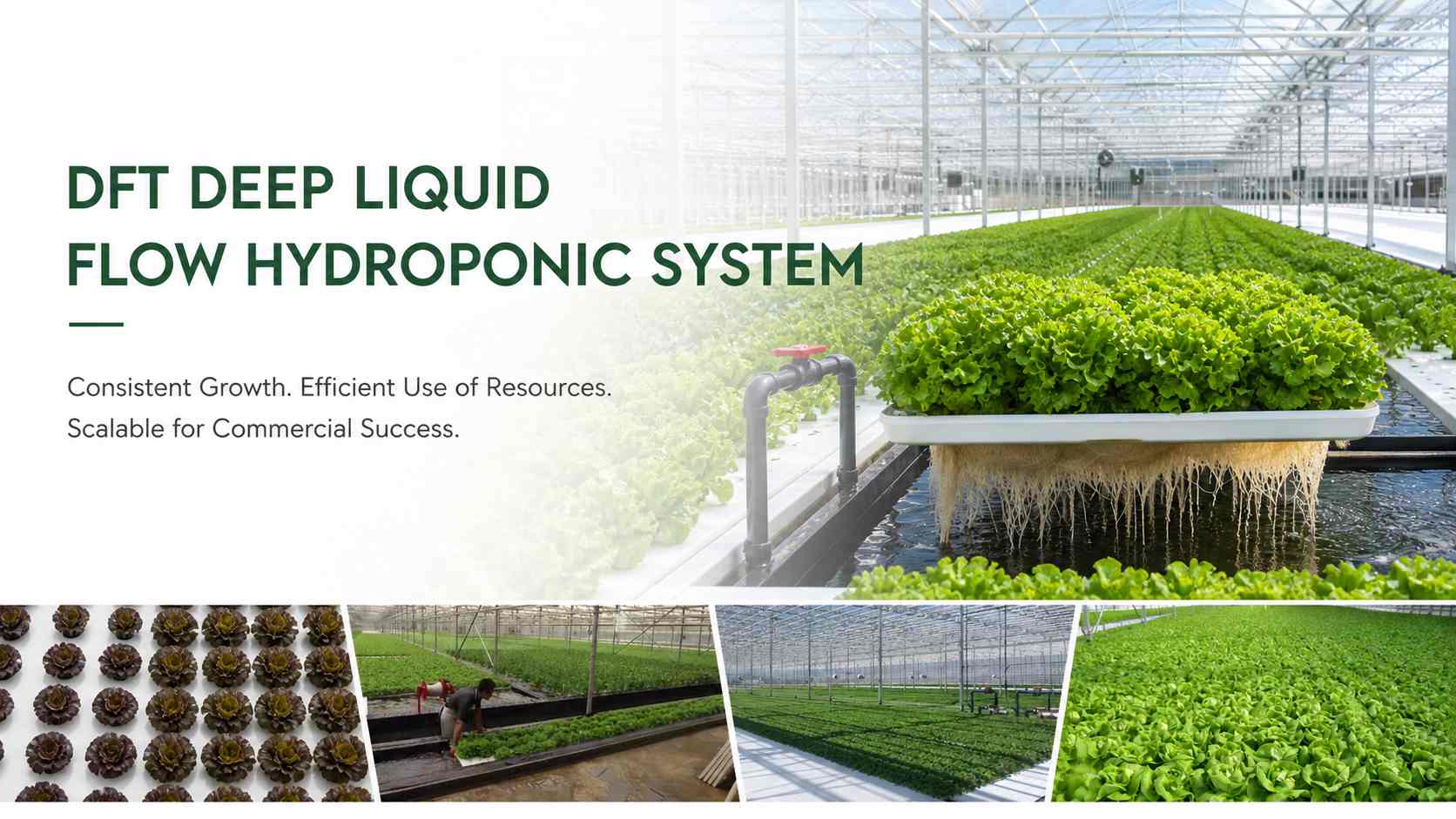
Market suggestions: Hot pot shops, Spicy Hot Pot restaurants, barbecue shops and other "volume oriented" catering terminals have high requirements for cleanliness and pesticide residues, and hydroponic leafless lettuce is perfect.
Suggestion from Yecaixia Technology: It is recommended to use floating board planting, sow and plant in batches every week, achieve "tiered listing", and continue to occupy the market.
4. Crisphead/Iceberg Lettese - a challenging variety with huge market potential
Representative varieties: Dahu 659, Emperor, Caesar, Crispy, Emerald.
Variety characteristics: The leaf balls are compact, the taste is extremely crispy, and the water content is sufficient. It is the lettuce with the largest usage in the global fast food chain (burger), but at the same time, it is also the lettuce type with the highest hydroponic technology requirements and the greatest planting difficulty.
DFT adaptability: Head lettuce can be successfully grown in the DFT system, but requires more refined temperature and humidity management, nutrient solution formula adjustment, and sufficient light. Once successful, the market returns are extremely lucrative.
Market suggestion: specialize in supplying high demand channels such as Western fast food chains and large hotel buffets, with long-term stable purchase orders.
Ye Caixia Technology suggests that lettuce is sensitive to temperature and can easily become loose when the temperature exceeds 25 ℃. It is recommended to plant in cool seasons or cold climate areas, and use the specialized nutrient solution formula provided by Yecai Xia Technology to effectively promote the compactness and fullness of leaf balls.
5. Purple Leaf Lettuce (Red Leaf/Lolo Rosso) - the "King of Vision" with high beauty and premium
Representative varieties: Red Sail Purple Leaf, Rosa Red, Violet.
Variety characteristics: The leaves are purple red, with high anthocyanin content and rich nutrition, making it an indispensable appearance in light salad.
DFT adaptability: The growth rate of purple lettuce is slightly slower than that of green leafy varieties, but DFT hydroponics can significantly promote its leaf color to be dark and bright, and its leaves to stretch, making it highly marketable.
Market suggestion: pair with green leafy lettuce for sale, go to high-end supermarkets and boutique salad shops, with strong premium ability.
Suggestion from Yecai Xia Technology: Purple leaf varieties prefer coolness and have a slightly lower planting density (16-18 plants per square meter). Adequate light can promote anthocyanin accumulation, making the color more attractive.
6. Oak Leaf Lettuce - The New Favorite of French Cuisine and Fine Salads
Representative varieties: Green Oak Leaf, Red Oak Leaf, Green Leaf Fanny.
Variety characteristics: The leaves have a unique oak leaf shape, wavy edges, soft texture, and excellent taste. They are commonly used in high-end French cuisine and boutique salads.
DFT adaptability: Oak leaf lettuce has a relatively loose plant type and vigorous root growth. It grows very well in the DFT system and is less prone to physiological diseases such as leaf edge necrosis.
Market suggestion: For high-end restaurants and boutique salad chains, purchase according to the "tree" or "gram", price is not sensitive, only quality is recognized.
Yecai Xia Technology suggests using high-quality seeds and strictly controlling the nitrogen ratio in the nutrient solution to prevent transportation losses caused by excessively soft leaves.
Why do you say that? Because lettuce has shallow root system, well-developed fibrous roots, short growth cycle, high commodity value, and extremely strong market demand. The DFT (deep liquid flow) hydroponic system can provide lettuce with a highly coordinated root environment of water, air, and fertilizer - the deep liquid layer has strong buffering capacity, stable nutrient supply, and no soil borne diseases, which can make lettuce grow faster, more tender, crisper, and more beautiful.
But the lettuce family is vast and diverse, and the performance of different varieties in DFT hydroponic systems varies greatly. Some varieties have extremely high yields after hydroponics, while others are prone to bolting, heart rot, or physiological disorders. Choosing the appropriate variety is the first step towards the success of the DFT hydroponic lettuce project.
As a council member of the Facility Agriculture Association with 16 independent intellectual property rights and providing solutions for over 400 professional planting companies worldwide, LEAFYMAN Technology has accumulated extremely rich variety data and planting experience in the field of lettuce hydroponics. Today, we will break down the DFT hydroponic system into which lettuce varieties it is suitable for, and how to make the optimal choice based on your market and climate conditions.
1、 Why is DFT hydroponic system the "optimal solution" for lettuce cultivation?
Before delving into the specific varieties, we need to first understand a core question: why can DFT hydroponic systems grow lettuce exceptionally well?
This starts with the biological characteristics of lettuce and the technical features of DFT system.
1. Root characteristics of lettuce
Lettuce belongs to shallow rooted leafy vegetables, with shallow root distribution but extremely developed fibrous roots. In soil, its root system is easily limited by soil compaction, acid-base imbalance, and soil borne diseases. In the DFT hydroponic system, the roots are directly immersed in a flowing nutrient solution of 5-10 centimeters, where water and nutrients are within reach. The roots do not need to be deeply rooted, and more energy can be used for rapid growth of the aboveground parts.
2. The growth cycle of lettuce
Lettuce has a short growth cycle and can generally be harvested 30-50 days after planting, which is very suitable for the advantage of DFT hydroponic system's "annual continuous production". Hydroponic lettuce grows faster than soil cultivated lettuce (usually by 5-7 days), has more replanting, and doubles the annual production capacity per unit area.
3. The commodity value of lettuce
Lettuce is the core ingredient in various catering formats such as salads, burgers, hotpot, and barbecue, with an extremely large market demand. Hydroponic lettuce, due to its cleanliness, soil free, pesticide residue free, and good appearance, can enter high-end supermarkets and restaurants, with prices 30% -100% higher than ordinary hydroponic lettuce.
4. Environmental buffering of DFT system
Lettuce is sensitive to changes in moisture and temperature, and the large thermal capacity and buffering capacity of the deep liquid layer in the DFT system can effectively avoid temperature fluctuations and water stress caused by short-term power outages and equipment failures. For lettuce, a delicate crop, this is a real 'safety insurance'.
2、 The six most suitable lettuce varieties for DFT hydroponic system
Based on the experience of over 400 vegetable cultivation projects worldwide, Yecai Xia Technology has selected the following lettuce varieties that perform outstandingly in the DFT hydroponic system.
1. Butterhead lettuce - the "classic king" of hydroponic lettuce
Representative varieties: Boston cream lettuce, Brim cream lettuce, Monterey cream lettuce.
Variety characteristics: The leaves are soft and tender, the leaf balls are soft, and the taste is smooth and sweet. It is the most successful and widely recognized category in the entire lettuce family for hydroponic cultivation.
DFT adaptability: Compact plant type, shallow and developed root system, very suitable for deep liquid flow environment. After planting, it can be harvested in about 30-45 days, with high yield and extremely high commodity rate.
Market recommendation: Suitable for almost all channels, including supermarkets, catering, and Western salad, it is the preferred variety for beginners.
Suggestion from Yecai Xia Technology: It is recommended to use planting cups combined with sponge blocks for seedling cultivation, with a planting density of 20-25 plants per square meter, nutrient solution EC controlled at 1.5-1.8 mS/cm, and pH 5.8-6.0.
2. Romaine Lettuce - the "salad star" with high appearance and high tolerance
Representative varieties: Green Roman, Red Roman, Kos Roman.
Variety characteristics: The leaves grow upright, the taste is crisp, and the nutritional value is high. It is the soul ingredient of Caesar salad and one of the most consumed lettuce types in the world.
DFT adaptability: The root system of Roman lettuce is slightly deeper than that of cream lettuce, but it still performs well in the deep liquid layer of DFT. Especially suitable for large-scale bases that require mechanized harvesting.
Market suggestion: Western restaurants, light food restaurants, and fast food chains should be the main purchasing varieties with stable volume and firm prices.
Yecai Xia Technology suggests increasing the planting density appropriately (20-22 plants per square meter) to improve the compactness of leaf balls. It is recommended to use sunshade nets during high temperatures in summer to reduce bitterness.
3. Leaf lettuce (Loose leaf) - the fastest growing "king of high turnover"
Representative varieties: Green Wave, Red Wave, Rapid Growth, Glass Lettuce, Rosa Lettuce.
Variety characteristics: No heading, loose leaves, extremely fast growth rate, can be harvested as a whole plant or multiple leaf splits about 50 days after sowing (25-30 days after planting).
DFT adaptability: Scattered lettuce has excellent adaptability to deep liquid flow, with the most significant advantage being its flexible harvesting period. It can be sold in small plants or after being grown, making it very suitable for flexibly adjusting the market rhythm in volatile environments.
Market suggestions: Hot pot shops, Spicy Hot Pot restaurants, barbecue shops and other "volume oriented" catering terminals have high requirements for cleanliness and pesticide residues, and hydroponic leafless lettuce is perfect.
Suggestion from Yecaixia Technology: It is recommended to use floating board planting, sow and plant in batches every week, achieve "tiered listing", and continue to occupy the market.
4. Crisphead/Iceberg Lettese - a challenging variety with huge market potential
Representative varieties: Dahu 659, Emperor, Caesar, Crispy, Emerald.
Variety characteristics: The leaf balls are compact, the taste is extremely crispy, and the water content is sufficient. It is the lettuce with the largest usage in the global fast food chain (burger), but at the same time, it is also the lettuce type with the highest hydroponic technology requirements and the greatest planting difficulty.
DFT adaptability: Head lettuce can be successfully grown in the DFT system, but requires more refined temperature and humidity management, nutrient solution formula adjustment, and sufficient light. Once successful, the market returns are extremely lucrative.
Market suggestion: specialize in supplying high demand channels such as Western fast food chains and large hotel buffets, with long-term stable purchase orders.
Ye Caixia Technology suggests that lettuce is sensitive to temperature and can easily become loose when the temperature exceeds 25 ℃. It is recommended to plant in cool seasons or cold climate areas, and use the specialized nutrient solution formula provided by Yecai Xia Technology to effectively promote the compactness and fullness of leaf balls.
5. Purple Leaf Lettuce (Red Leaf/Lolo Rosso) - the "King of Vision" with high beauty and premium
Representative varieties: Red Sail Purple Leaf, Rosa Red, Violet.
Variety characteristics: The leaves are purple red, with high anthocyanin content and rich nutrition, making it an indispensable appearance in light salad.
DFT adaptability: The growth rate of purple lettuce is slightly slower than that of green leafy varieties, but DFT hydroponics can significantly promote its leaf color to be dark and bright, and its leaves to stretch, making it highly marketable.
Market suggestion: pair with green leafy lettuce for sale, go to high-end supermarkets and boutique salad shops, with strong premium ability.
Suggestion from Yecai Xia Technology: Purple leaf varieties prefer coolness and have a slightly lower planting density (16-18 plants per square meter). Adequate light can promote anthocyanin accumulation, making the color more attractive.
6. Oak Leaf Lettuce - The New Favorite of French Cuisine and Fine Salads
Representative varieties: Green Oak Leaf, Red Oak Leaf, Green Leaf Fanny.
Variety characteristics: The leaves have a unique oak leaf shape, wavy edges, soft texture, and excellent taste. They are commonly used in high-end French cuisine and boutique salads.
DFT adaptability: Oak leaf lettuce has a relatively loose plant type and vigorous root growth. It grows very well in the DFT system and is less prone to physiological diseases such as leaf edge necrosis.
Market suggestion: For high-end restaurants and boutique salad chains, purchase according to the "tree" or "gram", price is not sensitive, only quality is recognized.
Yecai Xia Technology suggests using high-quality seeds and strictly controlling the nitrogen ratio in the nutrient solution to prevent transportation losses caused by excessively soft leaves.