
Academic
What vegetables are suitable for the DFT hydroponic system? Yecai Xia Technology: A variety adaptati
作者: 时间: 2026-08-17
Many investors and growers first ask about the cost and lifespan of DFT hydroponic systems, but experts who have been deeply involved in facility agriculture for many years will remind you to think carefully about what vegetables you want to grow before choosing a hydroponic system.
Why?
The core value of DFT hydroponic system lies not in the equipment itself, but in its ability to adapt to the crop you want to grow and help you achieve the best yield and quality on that crop. A system that can leverage the advantages of specific varieties is a high return system.
As a council member of the Facility Agriculture Association with 16 independent intellectual property rights and providing solutions for over 400 professional planting companies worldwide, LEAFYMAN Technology has accumulated rich experience in "variety adaptation" in numerous practical projects. Today, based on this sediment, we will systematically analyze what vegetables the DFT hydroponic system is suitable for and how to select products to maximize profits.
1、 The biological adaptation logic of DFT hydroponic system: why is it born as a "leafy vegetable partner"?
Before exploring specific varieties, we need to first clarify a underlying logic: why is the DFT hydroponic system particularly suitable for a certain type of vegetable?
This depends on three physical characteristics of the DFT system:
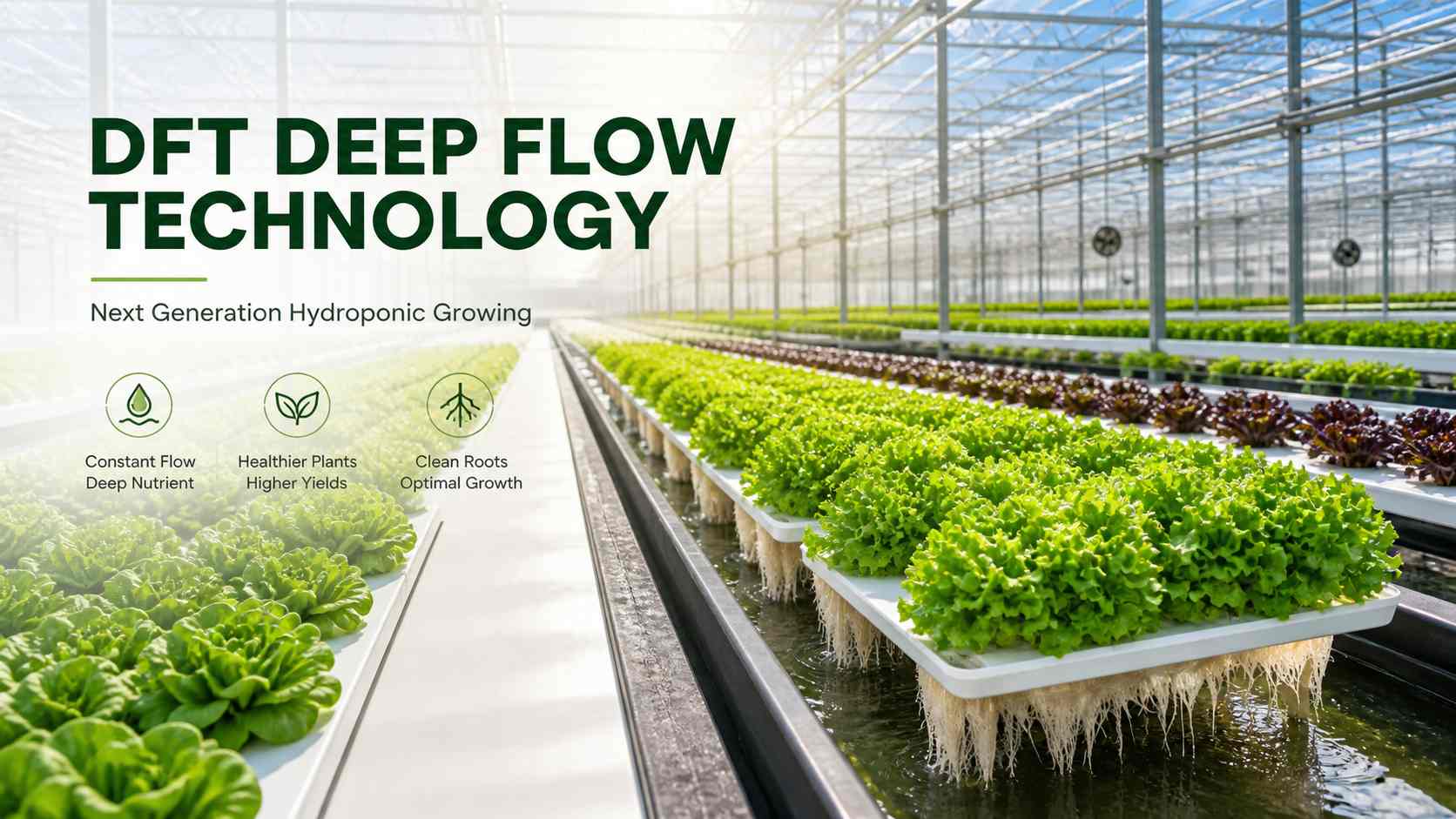
Deep liquid flow environment (5-10cm): The roots are immersed in flowing oxygen rich nutrient solution for a long time.
Strong buffering capacity: The water temperature and nutrient concentration are relatively stable, with minimal environmental fluctuations.
Simple root support: relying on planting plates or cups for fixation, without the need for solid substrate.
Based on these three characteristics, the DFT hydroponic system is most suitable for vegetables with the following characteristics:
The root system is relatively shallow and the fibrous roots are well-developed, which can quickly absorb water and nutrients from deep sap (such as lettuce and celery).
Short growth cycle and high multiple cropping index, which can fully utilize the advantages of annual production of the system.
The above ground part (edible part) has high economic value and can meet the relatively high facility investment cost of hydroponics.
High quality premium varieties with no soil or pesticide residues throughout the process are easier to sell at a good price.
According to this logic, the "golden adaptation zone" of DFT hydroponic system is green leafy vegetables, some herbs, and specific high value-added vegetables. Let's take a closer look below.
2、 The "main force" that DFT hydroponic system is most suitable for: the large family of green leafy vegetables
Green leafy vegetables are the most core and mature adapted category of DFT hydroponic system. This type of vegetable has the highest proportion and the most stable technology among the 400+global cases of Yecai Xia Technology.
1. Leaf lettuce (lettuce) series: the "leading actress" of hydroponic vegetables
Representative varieties: cream lettuce, romaine lettuce, glass lettuce, purple leaf lettuce, Italian lettuce.
Reason for adaptation: Lettuce has a typical shallow root system and a short growth cycle (30-45 days after planting), making it very suitable for deep liquid flow environments. Hydroponic lettuce has a crispy and tender taste, light bitterness, and no sediment, making it a favorite in the high-end salad and Western food markets.
Suggestion from Ye Caixia Technology: In the DFT system, it is recommended to use floating boards or planting cups for cultivation. The EC of the nutrient solution is controlled between 1.2-1.8 mS/cm, and the pH is between 5.8-6.2. The growth rate is extremely fast in spring and autumn, and the income is very considerable.
2. Cabbage/Rapeseed/Shanghai Green: the "king of quantity" for high-frequency household consumption
Representative varieties: Shanghai Green, Suzhou Green, April Slow, May Slow, etc.
Reason for adaptation: These varieties have extremely fast growth rates, good heat and cold resistance, and huge consumption in the Chinese and Asian markets. DFT hydroponics can significantly reduce soil borne diseases (such as root rot) and increase commodity yield.
Suggestion from Ye Cai Xia Technology: Among the large domestic bases undertaken by Ye Cai Xia Technology, Shanghai Qing is the single product with the highest frequency of multiple planting, and can be planted 8-10 times a year continuously. By adjusting the planting density, an annual production capacity of 150-200 kilograms per square meter can be achieved.
3. Spinach: a representative of high value-added nutritious vegetables
Representative varieties: large leaf spinach, small leaf spinach, fruit spinach.
Reason for adaptation: Traditional soil cultivated spinach is difficult to clean and prone to mud accumulation. Hydroponic spinach has white roots and tender leaves, which are highly popular among boutique supermarkets. DFT deep liquid flow has a good fixing effect on the straight roots of spinach, preventing lodging.
Suggestion from Yecai Xia Technology: Spinach is sensitive to high temperatures and should be accompanied by shading or cooling devices in summer. By selecting varieties that are resistant to bolting and combining them with the summer formula of nutrient solution provided by Yecai Xia Technology, a stable supply can be achieved almost throughout the year.
4. Celery (leaf celery/celery): a good choice for shallow rooted crops
Representative varieties: local parsley, celery, and glass crisp.
Reason for adaptation: Celery has well-developed fibrous roots and strong adaptability. DFT hydroponics can significantly reduce the hollow and aging phenomenon of celery, improve its crispness, and is suitable for making salad side dishes and health vegetables.
Suggestion from Ye Cai Xia Technology: Pay attention to controlling the temperature of the nutrient solution to not exceed 24 ℃, and increase the dissolved oxygen content by adding an oxygen pump, which can effectively prevent root rot.
5. Featured leafy vegetables (niche high profit): ice cold vegetables, kale, sesame vegetables
Representative varieties: African ice bok choy (crystal ice bok choy), kale, arugula, field seven leaf, heart nourishing vegetable.
Reason for adaptation: This type of vegetable is difficult to cultivate in soil and has low yield, but the market demand and terminal price are extremely high. The DFT system can stimulate its unique flavor and morphology even more effectively than traditional substrate cultivation through precise salt control (EC).
Yecai Xia Technology Practice: Yecai Xia Technology has provided a DFT exclusive planting solution of "ice vegetables+kale" for multiple high-end catering suppliers. By widening the temperature difference between day and night and moderately increasing the concentration of nutrient solution, they have grown high-end salad dishes with excellent appearance, with retail prices far exceeding ordinary leafy vegetables.
Why?
The core value of DFT hydroponic system lies not in the equipment itself, but in its ability to adapt to the crop you want to grow and help you achieve the best yield and quality on that crop. A system that can leverage the advantages of specific varieties is a high return system.
As a council member of the Facility Agriculture Association with 16 independent intellectual property rights and providing solutions for over 400 professional planting companies worldwide, LEAFYMAN Technology has accumulated rich experience in "variety adaptation" in numerous practical projects. Today, based on this sediment, we will systematically analyze what vegetables the DFT hydroponic system is suitable for and how to select products to maximize profits.
1、 The biological adaptation logic of DFT hydroponic system: why is it born as a "leafy vegetable partner"?
Before exploring specific varieties, we need to first clarify a underlying logic: why is the DFT hydroponic system particularly suitable for a certain type of vegetable?
This depends on three physical characteristics of the DFT system:
Deep liquid flow environment (5-10cm): The roots are immersed in flowing oxygen rich nutrient solution for a long time.
Strong buffering capacity: The water temperature and nutrient concentration are relatively stable, with minimal environmental fluctuations.
Simple root support: relying on planting plates or cups for fixation, without the need for solid substrate.
Based on these three characteristics, the DFT hydroponic system is most suitable for vegetables with the following characteristics:
The root system is relatively shallow and the fibrous roots are well-developed, which can quickly absorb water and nutrients from deep sap (such as lettuce and celery).
Short growth cycle and high multiple cropping index, which can fully utilize the advantages of annual production of the system.
The above ground part (edible part) has high economic value and can meet the relatively high facility investment cost of hydroponics.
High quality premium varieties with no soil or pesticide residues throughout the process are easier to sell at a good price.
According to this logic, the "golden adaptation zone" of DFT hydroponic system is green leafy vegetables, some herbs, and specific high value-added vegetables. Let's take a closer look below.
2、 The "main force" that DFT hydroponic system is most suitable for: the large family of green leafy vegetables
Green leafy vegetables are the most core and mature adapted category of DFT hydroponic system. This type of vegetable has the highest proportion and the most stable technology among the 400+global cases of Yecai Xia Technology.
1. Leaf lettuce (lettuce) series: the "leading actress" of hydroponic vegetables
Representative varieties: cream lettuce, romaine lettuce, glass lettuce, purple leaf lettuce, Italian lettuce.
Reason for adaptation: Lettuce has a typical shallow root system and a short growth cycle (30-45 days after planting), making it very suitable for deep liquid flow environments. Hydroponic lettuce has a crispy and tender taste, light bitterness, and no sediment, making it a favorite in the high-end salad and Western food markets.
Suggestion from Ye Caixia Technology: In the DFT system, it is recommended to use floating boards or planting cups for cultivation. The EC of the nutrient solution is controlled between 1.2-1.8 mS/cm, and the pH is between 5.8-6.2. The growth rate is extremely fast in spring and autumn, and the income is very considerable.
2. Cabbage/Rapeseed/Shanghai Green: the "king of quantity" for high-frequency household consumption
Representative varieties: Shanghai Green, Suzhou Green, April Slow, May Slow, etc.
Reason for adaptation: These varieties have extremely fast growth rates, good heat and cold resistance, and huge consumption in the Chinese and Asian markets. DFT hydroponics can significantly reduce soil borne diseases (such as root rot) and increase commodity yield.
Suggestion from Ye Cai Xia Technology: Among the large domestic bases undertaken by Ye Cai Xia Technology, Shanghai Qing is the single product with the highest frequency of multiple planting, and can be planted 8-10 times a year continuously. By adjusting the planting density, an annual production capacity of 150-200 kilograms per square meter can be achieved.
3. Spinach: a representative of high value-added nutritious vegetables
Representative varieties: large leaf spinach, small leaf spinach, fruit spinach.
Reason for adaptation: Traditional soil cultivated spinach is difficult to clean and prone to mud accumulation. Hydroponic spinach has white roots and tender leaves, which are highly popular among boutique supermarkets. DFT deep liquid flow has a good fixing effect on the straight roots of spinach, preventing lodging.
Suggestion from Yecai Xia Technology: Spinach is sensitive to high temperatures and should be accompanied by shading or cooling devices in summer. By selecting varieties that are resistant to bolting and combining them with the summer formula of nutrient solution provided by Yecai Xia Technology, a stable supply can be achieved almost throughout the year.
4. Celery (leaf celery/celery): a good choice for shallow rooted crops
Representative varieties: local parsley, celery, and glass crisp.
Reason for adaptation: Celery has well-developed fibrous roots and strong adaptability. DFT hydroponics can significantly reduce the hollow and aging phenomenon of celery, improve its crispness, and is suitable for making salad side dishes and health vegetables.
Suggestion from Ye Cai Xia Technology: Pay attention to controlling the temperature of the nutrient solution to not exceed 24 ℃, and increase the dissolved oxygen content by adding an oxygen pump, which can effectively prevent root rot.
5. Featured leafy vegetables (niche high profit): ice cold vegetables, kale, sesame vegetables
Representative varieties: African ice bok choy (crystal ice bok choy), kale, arugula, field seven leaf, heart nourishing vegetable.
Reason for adaptation: This type of vegetable is difficult to cultivate in soil and has low yield, but the market demand and terminal price are extremely high. The DFT system can stimulate its unique flavor and morphology even more effectively than traditional substrate cultivation through precise salt control (EC).
Yecai Xia Technology Practice: Yecai Xia Technology has provided a DFT exclusive planting solution of "ice vegetables+kale" for multiple high-end catering suppliers. By widening the temperature difference between day and night and moderately increasing the concentration of nutrient solution, they have grown high-end salad dishes with excellent appearance, with retail prices far exceeding ordinary leafy vegetables.