
Academic
Four Core Application Scenarios for Deep Water Culture (Floating Raft Systems): A Robust Selection G
作者: 时间: 2026-07-08
The Strategic Role of Deep Water Culture (Floating Raft System) in Commercial Horticulture
In the commercial landscape of protected agriculture, no single growing system can match the robust, "industrial ballast-like" performance of the Deep Water Culture (Floating Raft System, abbreviated as DFT) when confronting harsh external climates, high-standard bulk order fulfillment, and complex land conditions. Selecting a hydroponic system must not be blindly driven by conceptual trends; instead, it should be rigorously based on actual industrial demands. Leveraging its massive Thermal Inertia and its physical characteristics that are highly compatible with Logistics Automation, the Floating Raft System demonstrates an unparalleled, dominant advantage across the following four core application scenarios.
I. Regions with Extreme Climates and Unstable Power Grids: The Risk-Defying "Temperature Control & Survival Blueprint"
For regions suffering from extreme annual temperature fluctuations, scorching summers, freezing winters, or relatively weak power grid infrastructure, the Floating Raft System stands as the only robust choice for modern commercial cultivation.
Root-zone Temperature Control: In the freezing winters of northern regions or the hot, rainy summers of southern regions, drastic air temperature fluctuations can easily trigger crop physiological disorders (such as tipburn or desiccation in lettuce). Because the water depth in a DFT culture tank ranges from 10 to 30 cm, its massive volume provides exceptionally high physical thermal inertia. By smoothly regulating the water temperature via central heat pumps, the system locks the root-zone temperature into the golden zone of 18–22°C year-round.
72-Hour Power Outage Tolerance with Zero Wilting: In many emerging agricultural development zones or remote areas, sudden power outages, brief water supply disruptions, or mechanical failures can spell absolute disaster for high-density greenhouses (for instance, an NFT system can suffer total crop failure within hours due to its thin water film). In contrast, the root systems in a Floating Raft System remain fully submerged in a massive reservoir of nutrient solution. Even when facing extreme power or water failures lasting 48 to 72 hours, the crops can rely on the vast residual water in the tanks to survive normally, reducing investors' non-systemic risks to the lowest absolute baseline in the industry.
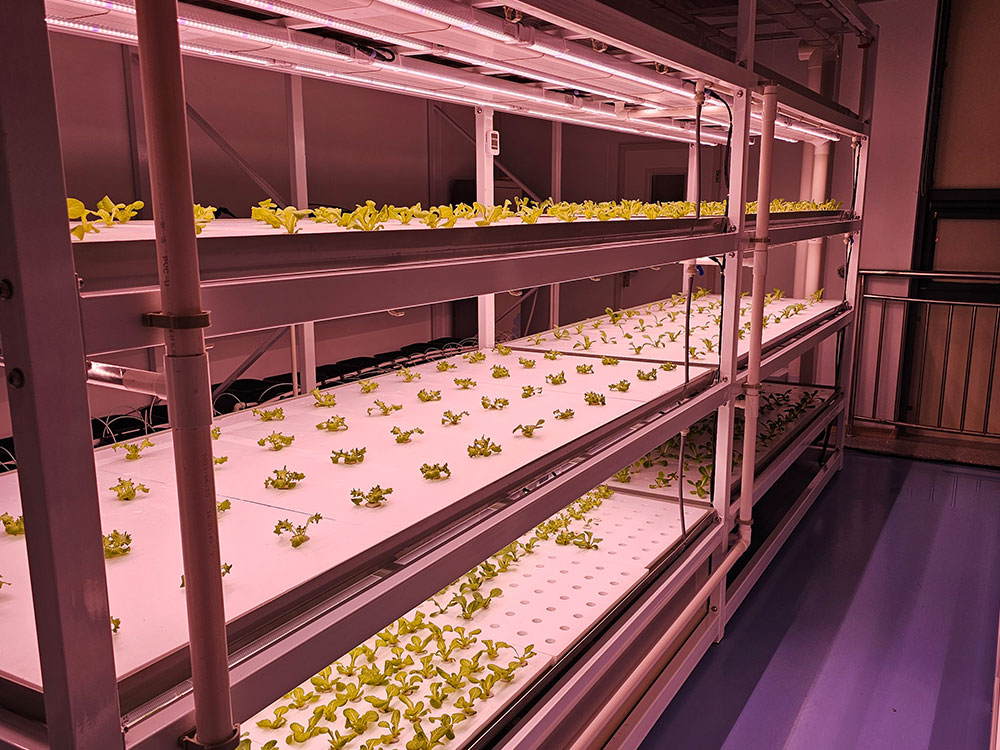
II. Commercial Supply Chains for Bulk Leafy Greens: "Year-Round Standardized Delivery" for Supermarkets and Instant Delivery Platforms
Modern supermarket chains, high-net-worth catering giants, and deep food processing enterprises (such as centralized salad kitchens) impose nearly draconian requirements on their supply chains: uninterrupted year-round supply, precise yield forecasting, locked pricing, and standardized appearance.
High Resilience and Bulk Standardization: The Floating Raft System is the gold standard for cultivating bulk green leafy vegetables such as iceberg lettuce, butterhead lettuce, romaine lettuce, and bok choy. Thanks to its immense Nutrient Buffering Capacity, sudden spikes or drops in EC and pH values are extremely rare. This ensures that every single batch of harvested vegetables achieves breathtaking consistency in leaf color, canopy size, and individual head weight, perfectly averting the "vegetable shortages" or quality collapses traditionally forced upon soil cultivation by seasonal shifts.
III. Industrial-Scale Automated Plant Factories: "Seamless Logistics Flow" with Zero Aisle Waste
In peri-urban areas and modern agricultural parks where land or greenhouse construction costs are exceptionally high and labor costs continue to climb, the DFT system serves as the strongest engine for automated logistics transformation.
Water-surface Logistics Network: Capitalizing on the physical trait of cultivation boards floating directly on the water, the DFT system transforms the entire greenhouse into a massive "waterborne automated logistics workshop." The floating rafts can glide effortlessly down the culture tanks as the crops mature. The process flows seamlessly from automated seeding and transplanting at the front end, to the tail end of the tank where hydraulic pushers smoothly propel the entire raft into central harvesting, washing, and packaging lines. Throughout the entire crop life cycle, no manual labor is required within the cultivation tanks. This completely eliminates the 30%+ fixed aisle space wasted in traditional agriculture, driving space utilization above 90% and fully unleashing economies of scale.
IV. Non-Arable Land and Ecological Adversity Remediation: Saline-Alkali Lands, Deserts, and Modern Urban Complexes
As national policies strictly safeguard arable land baselines, it has become an absolute necessity for protected agriculture to extract productivity from non-arable lands.
Completely Isolated Soil-Substitution Solutions: The Floating Raft System utilizes ground excavation lined with anti-seepage membranes or modular prefabricated coffer structures, completely isolating the cultivation process from the underlying soil. This feature allows the system to be deployed directly on uncultivable deserts, gobi, heavily saline-alkali lands, or even abandoned industrial sites. Furthermore, because the nutrient solution operates in a completely closed-loop recycling system, water and fertilizer efficiency is boosted by over 95%, achieving an exceptionally high level of eco-friendliness. Concurrently, its clean, orderly, and high-tech visual impact turns this aquatic oasis into a core traffic-driver for modern urban agricultural tourism and educational study bases.
In the commercial landscape of protected agriculture, no single growing system can match the robust, "industrial ballast-like" performance of the Deep Water Culture (Floating Raft System, abbreviated as DFT) when confronting harsh external climates, high-standard bulk order fulfillment, and complex land conditions. Selecting a hydroponic system must not be blindly driven by conceptual trends; instead, it should be rigorously based on actual industrial demands. Leveraging its massive Thermal Inertia and its physical characteristics that are highly compatible with Logistics Automation, the Floating Raft System demonstrates an unparalleled, dominant advantage across the following four core application scenarios.
I. Regions with Extreme Climates and Unstable Power Grids: The Risk-Defying "Temperature Control & Survival Blueprint"
For regions suffering from extreme annual temperature fluctuations, scorching summers, freezing winters, or relatively weak power grid infrastructure, the Floating Raft System stands as the only robust choice for modern commercial cultivation.
Root-zone Temperature Control: In the freezing winters of northern regions or the hot, rainy summers of southern regions, drastic air temperature fluctuations can easily trigger crop physiological disorders (such as tipburn or desiccation in lettuce). Because the water depth in a DFT culture tank ranges from 10 to 30 cm, its massive volume provides exceptionally high physical thermal inertia. By smoothly regulating the water temperature via central heat pumps, the system locks the root-zone temperature into the golden zone of 18–22°C year-round.
72-Hour Power Outage Tolerance with Zero Wilting: In many emerging agricultural development zones or remote areas, sudden power outages, brief water supply disruptions, or mechanical failures can spell absolute disaster for high-density greenhouses (for instance, an NFT system can suffer total crop failure within hours due to its thin water film). In contrast, the root systems in a Floating Raft System remain fully submerged in a massive reservoir of nutrient solution. Even when facing extreme power or water failures lasting 48 to 72 hours, the crops can rely on the vast residual water in the tanks to survive normally, reducing investors' non-systemic risks to the lowest absolute baseline in the industry.
II. Commercial Supply Chains for Bulk Leafy Greens: "Year-Round Standardized Delivery" for Supermarkets and Instant Delivery Platforms
Modern supermarket chains, high-net-worth catering giants, and deep food processing enterprises (such as centralized salad kitchens) impose nearly draconian requirements on their supply chains: uninterrupted year-round supply, precise yield forecasting, locked pricing, and standardized appearance.
High Resilience and Bulk Standardization: The Floating Raft System is the gold standard for cultivating bulk green leafy vegetables such as iceberg lettuce, butterhead lettuce, romaine lettuce, and bok choy. Thanks to its immense Nutrient Buffering Capacity, sudden spikes or drops in EC and pH values are extremely rare. This ensures that every single batch of harvested vegetables achieves breathtaking consistency in leaf color, canopy size, and individual head weight, perfectly averting the "vegetable shortages" or quality collapses traditionally forced upon soil cultivation by seasonal shifts.
III. Industrial-Scale Automated Plant Factories: "Seamless Logistics Flow" with Zero Aisle Waste
In peri-urban areas and modern agricultural parks where land or greenhouse construction costs are exceptionally high and labor costs continue to climb, the DFT system serves as the strongest engine for automated logistics transformation.
Water-surface Logistics Network: Capitalizing on the physical trait of cultivation boards floating directly on the water, the DFT system transforms the entire greenhouse into a massive "waterborne automated logistics workshop." The floating rafts can glide effortlessly down the culture tanks as the crops mature. The process flows seamlessly from automated seeding and transplanting at the front end, to the tail end of the tank where hydraulic pushers smoothly propel the entire raft into central harvesting, washing, and packaging lines. Throughout the entire crop life cycle, no manual labor is required within the cultivation tanks. This completely eliminates the 30%+ fixed aisle space wasted in traditional agriculture, driving space utilization above 90% and fully unleashing economies of scale.
IV. Non-Arable Land and Ecological Adversity Remediation: Saline-Alkali Lands, Deserts, and Modern Urban Complexes
As national policies strictly safeguard arable land baselines, it has become an absolute necessity for protected agriculture to extract productivity from non-arable lands.
Completely Isolated Soil-Substitution Solutions: The Floating Raft System utilizes ground excavation lined with anti-seepage membranes or modular prefabricated coffer structures, completely isolating the cultivation process from the underlying soil. This feature allows the system to be deployed directly on uncultivable deserts, gobi, heavily saline-alkali lands, or even abandoned industrial sites. Furthermore, because the nutrient solution operates in a completely closed-loop recycling system, water and fertilizer efficiency is boosted by over 95%, achieving an exceptionally high level of eco-friendliness. Concurrently, its clean, orderly, and high-tech visual impact turns this aquatic oasis into a core traffic-driver for modern urban agricultural tourism and educational study bases.