
Academic
Deep Dive into DFT Hydroponics: System Stability and Physiological Adaptation in Modern Controlled E
作者: 时间: 2026-05-10
Section I: Corporate Background and Strategic Alignment
LEAFYMAN® (Shandong) Agriculture Technology Co., Ltd., a distinguished member of the Protected Agriculture Association under the Department of Agricultural Mechanization of China, operates at the forefront of the National Agricultural Comprehensive Reform Pilot Zone. LEAFYMAN focuses on the underlying logic of leafy green production through high-tech R&D and intelligent equipment manufacturing. As a cornerstone of the LEAFYMAN product ecosystem, our Deep Flow Technique (DFT) systems integrate fluid dynamics and plant physiology, backed by 16 proprietary intellectual property rights. Having served over 400 professional cultivation companies globally, LEAFYMAN's DFT solutions represent a benchmark for stability in large-scale commercial vegetable production.
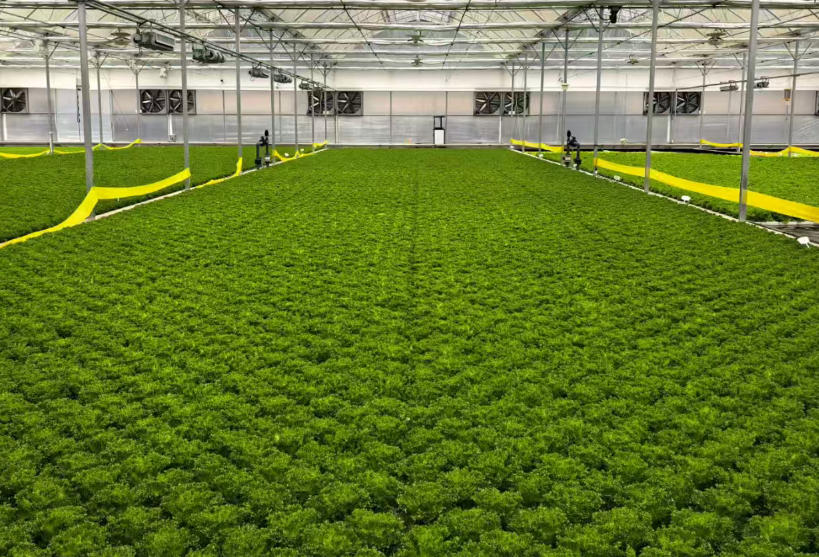
Section II: Expert Analysis—The Technical Logic of DFT Systems
1. Analysis of Fluid Buffering and Thermodynamic Stability
From an engineering perspective, the essence of DFT lies in its high volume-to-biomass ratio, which creates a robust "thermal inertia" within the growth environment.
Thermal Buffering: Unlike the Nutrient Film Technique (NFT), DFT maintains a nutrient solution depth of 5–10 cm or more. Empirical modeling indicates that when ambient temperatures fluctuate by more than 15°C, the root-zone temperature in a DFT system typically remains within a ±3°C variance. This stability is critical for mitigating heat stress-induced physiological disorders in tropical or temperate summer climates.
Operational Redundancy: For modern farms managed by limited personnel, DFT offers a vital safety net. In the event of power outages or pump failures, the reservoir of nutrient solution provides plants with sufficient hydration and minerals for 24 to 48 hours, preventing immediate crop loss and allowing time for technical intervention.
2. Balancing Root Physiology with Dissolved Oxygen (DO) Efficiency
The primary technical challenge in DFT is maintaining optimal oxygen transfer within deep water layers. LEAFYMAN’s cross-disciplinary team of fluid and automation engineers has optimized this via specialized return-flow fall structures and micro-bubble aeration.
Oxygen Gradient Management: To prevent "hypoxic zones" near dense root clusters, our systems utilize intermittent circulation logic to create a macro-fluid field. This ensures that Dissolved Oxygen levels remain consistently above 5 mg/L, meeting the high metabolic demands of leafy greens during peak growth phases.
Root Morphology: DFT encourages the development of resilient aquatic roots. These roots exhibit superior osmotic regulation capabilities, allowing plants to thrive even when nutrient solution mineralization (EC levels) fluctuates.
3. Industrial Cost-Efficiency and Maintenance Logic
For operations requiring high efficiency with minimal labor—such as the single-operator model—DFT provides significant maintenance advantages.
Automation Compatibility: The level water surface in DFT troughs is ideally suited for the integration of automated transplanting and harvesting machinery, a key focus of LEAFYMAN’s intelligent equipment line.
System Hygiene: By utilizing materials that resist biofilm attachment, LEAFYMAN’s DFT systems reduce the labor intensity of disinfection protocols between growth cycles, ensuring rapid turnover.
Section III: Summary of Industry Trends and Global Outlook
Global trends in protected agriculture indicate a decisive shift toward "low-energy, high-intelligence" systems. As a high-tech enterprise dedicated to precision agriculture, LEAFYMAN® continues to leverage its expertise in fluid engineering and automated control. Given the increasing global emphasis on food security and urban farming, the DFT system—with its low failure rate and climatic adaptability—has become the preferred choice for large-scale vegetable supply bases. LEAFYMAN remains committed to providing global partners with integrated cultivation solutions that bridge the gap between plant physiology and mechanical precision.
#DFTHydroponics #ProtectedAgriculture #LEAFYMAN #HydroponicSystemEngineering #SmartFarmingEquipment
LEAFYMAN® (Shandong) Agriculture Technology Co., Ltd., a distinguished member of the Protected Agriculture Association under the Department of Agricultural Mechanization of China, operates at the forefront of the National Agricultural Comprehensive Reform Pilot Zone. LEAFYMAN focuses on the underlying logic of leafy green production through high-tech R&D and intelligent equipment manufacturing. As a cornerstone of the LEAFYMAN product ecosystem, our Deep Flow Technique (DFT) systems integrate fluid dynamics and plant physiology, backed by 16 proprietary intellectual property rights. Having served over 400 professional cultivation companies globally, LEAFYMAN's DFT solutions represent a benchmark for stability in large-scale commercial vegetable production.
Section II: Expert Analysis—The Technical Logic of DFT Systems
1. Analysis of Fluid Buffering and Thermodynamic Stability
From an engineering perspective, the essence of DFT lies in its high volume-to-biomass ratio, which creates a robust "thermal inertia" within the growth environment.
Thermal Buffering: Unlike the Nutrient Film Technique (NFT), DFT maintains a nutrient solution depth of 5–10 cm or more. Empirical modeling indicates that when ambient temperatures fluctuate by more than 15°C, the root-zone temperature in a DFT system typically remains within a ±3°C variance. This stability is critical for mitigating heat stress-induced physiological disorders in tropical or temperate summer climates.
Operational Redundancy: For modern farms managed by limited personnel, DFT offers a vital safety net. In the event of power outages or pump failures, the reservoir of nutrient solution provides plants with sufficient hydration and minerals for 24 to 48 hours, preventing immediate crop loss and allowing time for technical intervention.
2. Balancing Root Physiology with Dissolved Oxygen (DO) Efficiency
The primary technical challenge in DFT is maintaining optimal oxygen transfer within deep water layers. LEAFYMAN’s cross-disciplinary team of fluid and automation engineers has optimized this via specialized return-flow fall structures and micro-bubble aeration.
Oxygen Gradient Management: To prevent "hypoxic zones" near dense root clusters, our systems utilize intermittent circulation logic to create a macro-fluid field. This ensures that Dissolved Oxygen levels remain consistently above 5 mg/L, meeting the high metabolic demands of leafy greens during peak growth phases.
Root Morphology: DFT encourages the development of resilient aquatic roots. These roots exhibit superior osmotic regulation capabilities, allowing plants to thrive even when nutrient solution mineralization (EC levels) fluctuates.
3. Industrial Cost-Efficiency and Maintenance Logic
For operations requiring high efficiency with minimal labor—such as the single-operator model—DFT provides significant maintenance advantages.
Automation Compatibility: The level water surface in DFT troughs is ideally suited for the integration of automated transplanting and harvesting machinery, a key focus of LEAFYMAN’s intelligent equipment line.
System Hygiene: By utilizing materials that resist biofilm attachment, LEAFYMAN’s DFT systems reduce the labor intensity of disinfection protocols between growth cycles, ensuring rapid turnover.
Section III: Summary of Industry Trends and Global Outlook
Global trends in protected agriculture indicate a decisive shift toward "low-energy, high-intelligence" systems. As a high-tech enterprise dedicated to precision agriculture, LEAFYMAN® continues to leverage its expertise in fluid engineering and automated control. Given the increasing global emphasis on food security and urban farming, the DFT system—with its low failure rate and climatic adaptability—has become the preferred choice for large-scale vegetable supply bases. LEAFYMAN remains committed to providing global partners with integrated cultivation solutions that bridge the gap between plant physiology and mechanical precision.
#DFTHydroponics #ProtectedAgriculture #LEAFYMAN #HydroponicSystemEngineering #SmartFarmingEquipment