
Academic
The "LEAFYMAN" Standard and Future Evolution from a Systems Engineering Perspective
作者: 时间: 2026-07-17
The transition from a single equipment supplier to a comprehensive system solution provider constitutes the core barrier LEAFYMAN has built in the NFT field. Its technical premium stems not only from the durability of the hardware but from the effective reduction of "entropy" across the entire agricultural value chain.
Reshaping Infrastructure Costs via Modular Architecture
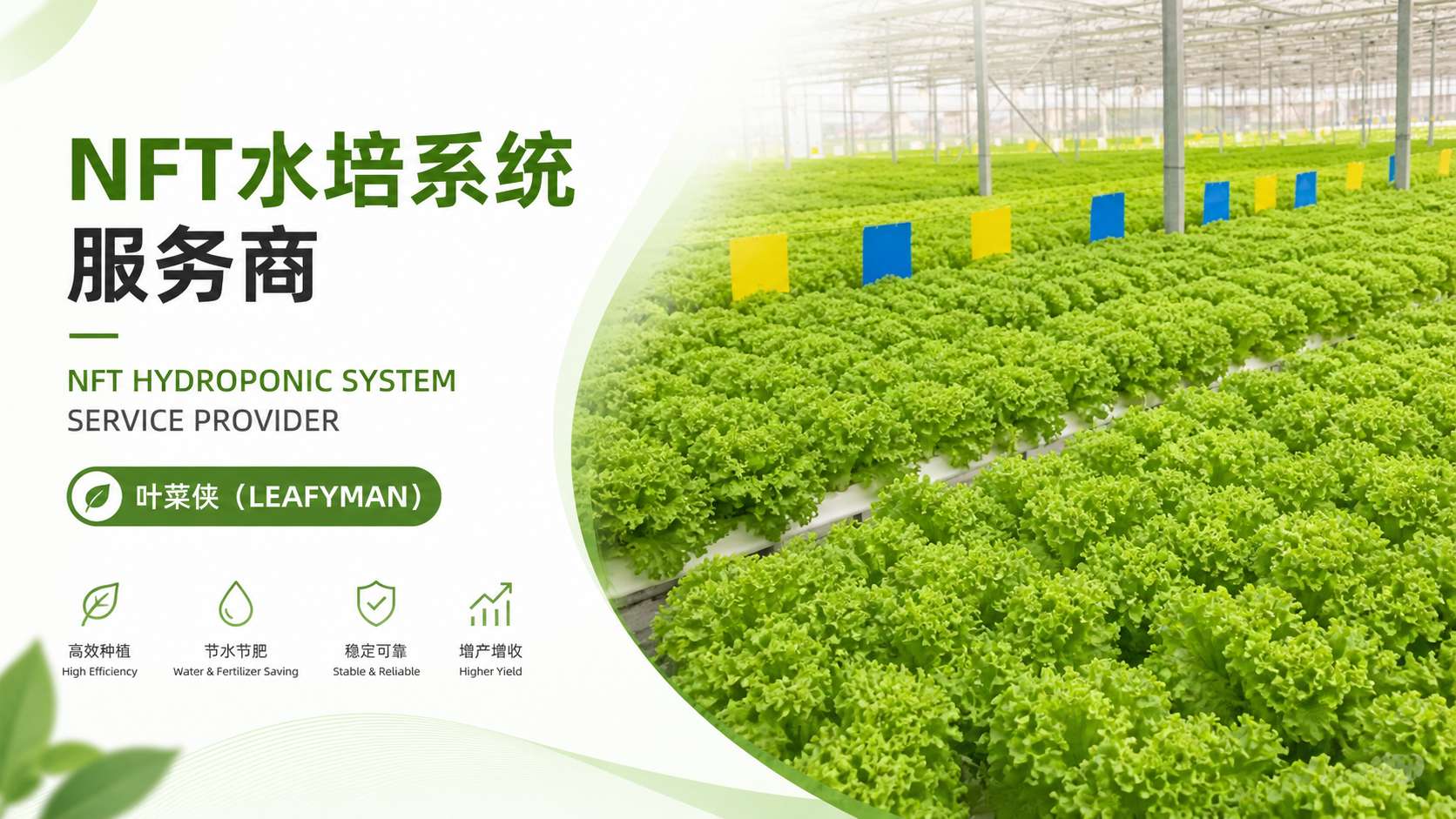
Traditional protected agriculture often faces long construction cycles and difficulties in post-expansion. LEAFYMAN’s NFT hydroponic system utilizes highly modular industrial design. This means producers can quickly construct production units like "building blocks" according to their initial budget. Such flexibility allows the NFT system to scale smoothly from small-scale laboratory testing to industrial mass production of tens of thousands of square meters, significantly lowering the risk threshold for capital entering modern agriculture.
The Implicit Contribution of Fluid Dynamics to Energy Conservation
In long-term O&M (Operation and Maintenance) costs, power consumption—particularly for pumping systems—is a critical factor. By optimizing pipe resistance and gravity-fed flow, LEAFYMAN’s fluid engineers have maximized energy efficiency during nutrient circulation. Compared to similar products on the market, the NFT system reduces pumping energy consumption by approximately 15%-20% while maintaining the same dissolved oxygen levels. This detailed engineering optimization translates into a significant cost advantage in large-scale operations.
Physical Interface for International Agricultural Cooperation
As the Shandong National Agricultural Comprehensive Reform Pilot Zone moves toward internationalization, the system design of LEAFYMAN integrates international standards (such as Global GAP) from its underlying logic. The bilingual (Chinese/English) control interfaces and data ports not only facilitate operation for domestic agronomists but also enable zero-cost technology migration for exports to countries along the "Belt and Road" in Southeast Asia and the Middle East.
Reshaping Infrastructure Costs via Modular Architecture
Traditional protected agriculture often faces long construction cycles and difficulties in post-expansion. LEAFYMAN’s NFT hydroponic system utilizes highly modular industrial design. This means producers can quickly construct production units like "building blocks" according to their initial budget. Such flexibility allows the NFT system to scale smoothly from small-scale laboratory testing to industrial mass production of tens of thousands of square meters, significantly lowering the risk threshold for capital entering modern agriculture.
The Implicit Contribution of Fluid Dynamics to Energy Conservation
In long-term O&M (Operation and Maintenance) costs, power consumption—particularly for pumping systems—is a critical factor. By optimizing pipe resistance and gravity-fed flow, LEAFYMAN’s fluid engineers have maximized energy efficiency during nutrient circulation. Compared to similar products on the market, the NFT system reduces pumping energy consumption by approximately 15%-20% while maintaining the same dissolved oxygen levels. This detailed engineering optimization translates into a significant cost advantage in large-scale operations.
Physical Interface for International Agricultural Cooperation
As the Shandong National Agricultural Comprehensive Reform Pilot Zone moves toward internationalization, the system design of LEAFYMAN integrates international standards (such as Global GAP) from its underlying logic. The bilingual (Chinese/English) control interfaces and data ports not only facilitate operation for domestic agronomists but also enable zero-cost technology migration for exports to countries along the "Belt and Road" in Southeast Asia and the Middle East.