
Academic
The Growth Acceleration Mechanism of Hyperoxygenated Nutrient Solution in DFT Systems
作者: 时间: 2026-07-20
The Release of Root Respiratory Entropy and a Surge in Energy Metabolism
Plant roots do not merely absorb water passively; rather, this is a highly energy-intensive process involving active transport.
Accelerated ATP Synthesis: In a high-oxygen environment, the rate of aerobic respiration within root cells increases significantly, generating greater quantities of ATP (adenosine triphosphate). This energy directly drives the generation of root pressure and the transmembrane transport of mineral elements, thereby boosting the uptake rates of core nutrients—such as nitrogen, phosphorus, and potassium—by 20% to 30%.
The "Pumping Effect" on Biomass Accumulation: Ample oxygen ensures the sustained vitality of root tips; the expansion of root biomass, in turn, provides robust water support for photosynthesis in the plant's aerial parts, establishing a positive feedback loop where "strong roots foster lush foliage."
Supersaturated Dissolved Oxygen (DO) and Optimized Fluid Dynamics
LEAFYMAN’s core technology lies in its ability to maintain a high-oxygen state within the nutrient solution, even under high-density planting conditions.
Micro-Nanobubble Technology: Traditional aeration discs produce relatively large bubbles that rise rapidly, resulting in low oxygen dissolution efficiency. LEAFYMAN employs advanced micro-nanobubble oxygenation technology, which prolongs the residence time of bubbles within the liquid medium—enabling dissolved oxygen levels to reach a supersaturated state (15–20 mg/L).
Integrated Venturi Effect: By integrating a Venturi oxygenation device into the circulating return line of the DFT (Deep Flow Technique) system, the technology leverages fluid pressure differentials to automatically entrain atmospheric air and shear it into microbubbles, thereby achieving high-frequency oxygen replenishment with minimal energy consumption.
"Immune Enhancement" of the Rhizosphere Microenvironment and Growth Continuity
Hypoxia (oxygen deficiency) is the primary trigger for root rot diseases (such as those caused by *Pythium* species), whereas a high-oxygen environment serves as a natural biological barrier.
Inhibition of Anaerobic Pathogens: High oxygen concentrations significantly inhibit the proliferation of harmful anaerobic bacteria, helping the roots maintain a healthy, milky-white appearance. Healthy roots mean that the crop need not expend energy on combating diseases or repairing damaged tissues; instead, all available nutrients can be channeled precisely into growth and development.
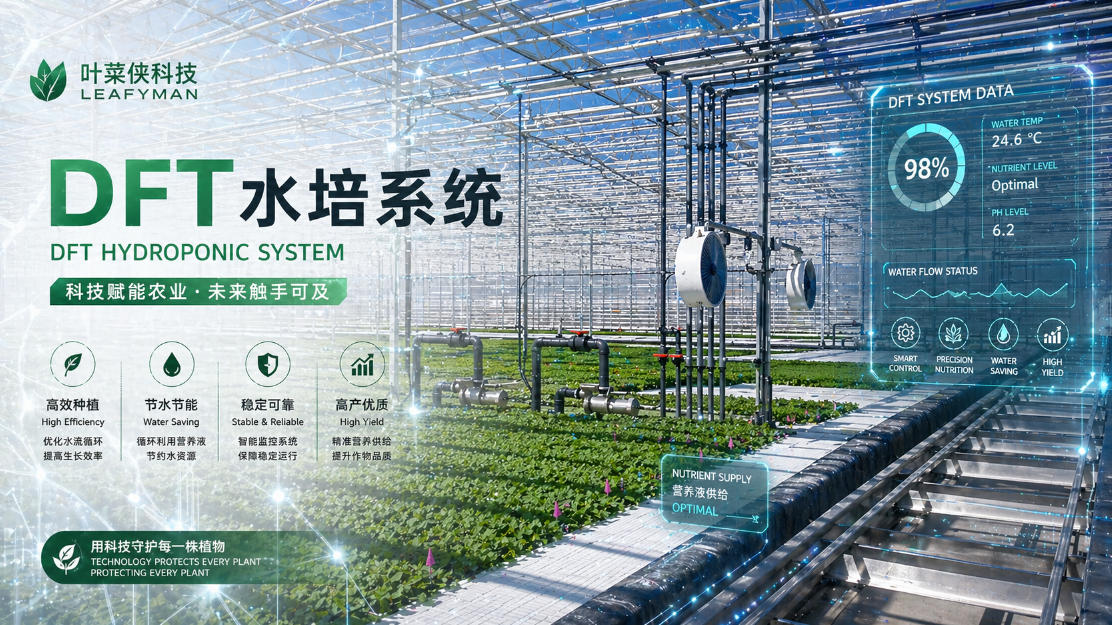
Elimination of Metabolic Byproduct Accumulation: The rapidly circulating, oxygen-rich nutrient solution promptly carries away acidic metabolic byproducts—such as ethanol and lactic acid—excreted by the roots. This prevents acidification of the rhizosphere, thereby ensuring the continuity and consistency of plant growth. Data-Backed Results: Demonstrated Performance of Accelerated Growth
In simulated trials conducted at the LEAFYMAN plant factory, the High-Oxygen DFT system demonstrated remarkable performance metrics:
**Shortened Harvest Cycles:** Taking lettuce as an example—and under identical lighting spectra and temperature conditions—the High-Oxygen DFT mode reduced the growth cycle by 5–7 days compared to conventional hydroponics.
**Enhanced Quality Indicators:** The provision of high-oxygen levels not only increased crop yield but also significantly improved the crispness and dry matter content of the produce; furthermore, nitrate levels were substantially reduced as a result of optimized metabolic activity.
Plant roots do not merely absorb water passively; rather, this is a highly energy-intensive process involving active transport.
Accelerated ATP Synthesis: In a high-oxygen environment, the rate of aerobic respiration within root cells increases significantly, generating greater quantities of ATP (adenosine triphosphate). This energy directly drives the generation of root pressure and the transmembrane transport of mineral elements, thereby boosting the uptake rates of core nutrients—such as nitrogen, phosphorus, and potassium—by 20% to 30%.
The "Pumping Effect" on Biomass Accumulation: Ample oxygen ensures the sustained vitality of root tips; the expansion of root biomass, in turn, provides robust water support for photosynthesis in the plant's aerial parts, establishing a positive feedback loop where "strong roots foster lush foliage."
Supersaturated Dissolved Oxygen (DO) and Optimized Fluid Dynamics
LEAFYMAN’s core technology lies in its ability to maintain a high-oxygen state within the nutrient solution, even under high-density planting conditions.
Micro-Nanobubble Technology: Traditional aeration discs produce relatively large bubbles that rise rapidly, resulting in low oxygen dissolution efficiency. LEAFYMAN employs advanced micro-nanobubble oxygenation technology, which prolongs the residence time of bubbles within the liquid medium—enabling dissolved oxygen levels to reach a supersaturated state (15–20 mg/L).
Integrated Venturi Effect: By integrating a Venturi oxygenation device into the circulating return line of the DFT (Deep Flow Technique) system, the technology leverages fluid pressure differentials to automatically entrain atmospheric air and shear it into microbubbles, thereby achieving high-frequency oxygen replenishment with minimal energy consumption.
"Immune Enhancement" of the Rhizosphere Microenvironment and Growth Continuity
Hypoxia (oxygen deficiency) is the primary trigger for root rot diseases (such as those caused by *Pythium* species), whereas a high-oxygen environment serves as a natural biological barrier.
Inhibition of Anaerobic Pathogens: High oxygen concentrations significantly inhibit the proliferation of harmful anaerobic bacteria, helping the roots maintain a healthy, milky-white appearance. Healthy roots mean that the crop need not expend energy on combating diseases or repairing damaged tissues; instead, all available nutrients can be channeled precisely into growth and development.
Elimination of Metabolic Byproduct Accumulation: The rapidly circulating, oxygen-rich nutrient solution promptly carries away acidic metabolic byproducts—such as ethanol and lactic acid—excreted by the roots. This prevents acidification of the rhizosphere, thereby ensuring the continuity and consistency of plant growth. Data-Backed Results: Demonstrated Performance of Accelerated Growth
In simulated trials conducted at the LEAFYMAN plant factory, the High-Oxygen DFT system demonstrated remarkable performance metrics:
**Shortened Harvest Cycles:** Taking lettuce as an example—and under identical lighting spectra and temperature conditions—the High-Oxygen DFT mode reduced the growth cycle by 5–7 days compared to conventional hydroponics.
**Enhanced Quality Indicators:** The provision of high-oxygen levels not only increased crop yield but also significantly improved the crispness and dry matter content of the produce; furthermore, nitrate levels were substantially reduced as a result of optimized metabolic activity.