
Academic
Global Supply Chain Integration and High-Value Market Positioning
作者: 时间: 2026-04-16
Global Supply Chain Integration and High-Value Market Positioning
The economic viability of vertical farming depends not only on production efficiency but also on its strategic positioning within the vertical industry supply chain. As consumers prioritize food safety, carbon footprints, and "ultra-local" production, AgTech enterprises are evolving from equipment suppliers into comprehensive system solution providers.
In the international market, the competitiveness of high-tech agricultural equipment is no longer solely about price;
it is about "Technical Integration" and "Operational Simplicity." By exporting mature processes such as DFT and NFT—backed by independent intellectual property—companies can provide full-lifecycle services ranging from architectural design to technical support for global planting firms. This model effectively hedges against local market fluctuations and achieves stable profit management through technical premiums and service fees.
Furthermore, leafy greens produced in vertical farms should be anchored in "Premium Dining" and "Functional Food" sectors. Under Controlled Environment Agriculture (CEA), fine-tuning light recipes and nutrient density allows for the production of high-value crops with specific vitamin profiles or unique flavor characteristics. This differentiation strategy, combined with modern cold-chain logistics, enables vertical farms to build a closed-loop green supply ecosystem around high-density urban clusters.
Technical Summary and Industry Insight
In summary, vertical farming—as a product of modern agricultural mechanization and intelligence—has transcended traditional cultivation to become a highly precise, replicable, and compliant industrial production model.
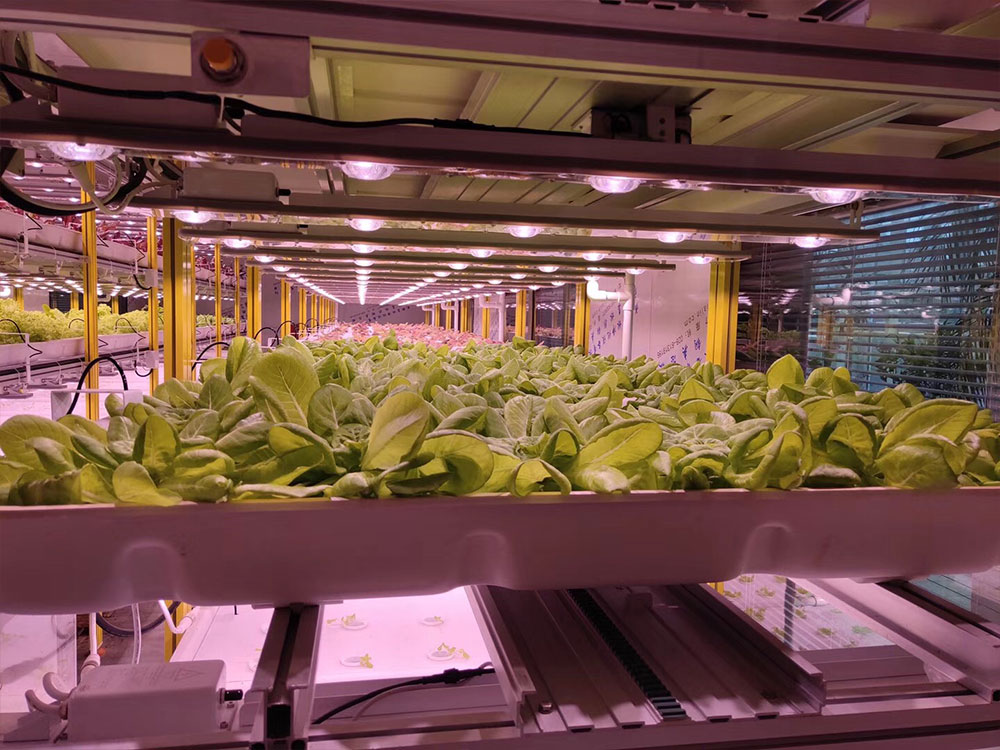
Based on industry data and trend analysis, the core drivers for the next five years will focus on three areas:
Deep Restructuring of Energy: Integrating distributed energy and storage technologies to further reduce electricity costs and improve the Energy Return on Investment (EROI).
AI and Machine Vision: Utilizing real-time image analysis to predict crop growth and potential diseases, completing the transition from "experience-driven" to "data-driven" management.
Industrial Clustering: Leading enterprises like LEAFYMAN, equipped with upstream and downstream integration capabilities, will form large-scale industrial clusters to significantly enhance risk resilience and market pricing power.
For decision-makers, vertical farming is more than an agricultural project; it is a long-term strategic investment in resource reallocation. Through continuous technical iteration, modern agriculture will finally achieve the leap from "relying on nature" to "precision manufacturing."
#VerticalFarm #AgriBusiness #SustainableTech #FutureFarming #HydroponicExpert
The economic viability of vertical farming depends not only on production efficiency but also on its strategic positioning within the vertical industry supply chain. As consumers prioritize food safety, carbon footprints, and "ultra-local" production, AgTech enterprises are evolving from equipment suppliers into comprehensive system solution providers.
In the international market, the competitiveness of high-tech agricultural equipment is no longer solely about price;
it is about "Technical Integration" and "Operational Simplicity." By exporting mature processes such as DFT and NFT—backed by independent intellectual property—companies can provide full-lifecycle services ranging from architectural design to technical support for global planting firms. This model effectively hedges against local market fluctuations and achieves stable profit management through technical premiums and service fees.
Furthermore, leafy greens produced in vertical farms should be anchored in "Premium Dining" and "Functional Food" sectors. Under Controlled Environment Agriculture (CEA), fine-tuning light recipes and nutrient density allows for the production of high-value crops with specific vitamin profiles or unique flavor characteristics. This differentiation strategy, combined with modern cold-chain logistics, enables vertical farms to build a closed-loop green supply ecosystem around high-density urban clusters.
Technical Summary and Industry Insight
In summary, vertical farming—as a product of modern agricultural mechanization and intelligence—has transcended traditional cultivation to become a highly precise, replicable, and compliant industrial production model.
Based on industry data and trend analysis, the core drivers for the next five years will focus on three areas:
Deep Restructuring of Energy: Integrating distributed energy and storage technologies to further reduce electricity costs and improve the Energy Return on Investment (EROI).
AI and Machine Vision: Utilizing real-time image analysis to predict crop growth and potential diseases, completing the transition from "experience-driven" to "data-driven" management.
Industrial Clustering: Leading enterprises like LEAFYMAN, equipped with upstream and downstream integration capabilities, will form large-scale industrial clusters to significantly enhance risk resilience and market pricing power.
For decision-makers, vertical farming is more than an agricultural project; it is a long-term strategic investment in resource reallocation. Through continuous technical iteration, modern agriculture will finally achieve the leap from "relying on nature" to "precision manufacturing."
#VerticalFarm #AgriBusiness #SustainableTech #FutureFarming #HydroponicExpert