
Academic
Vertical Farming: Architectural Revolution and Technological Paradigms in Modern Leafy Green Product
作者: 时间: 2026-04-15
The global agricultural landscape is undergoing a structural transformation, driven by the escalating pressures of urbanization, climate volatility, and the imperative for food sovereignty. At the forefront of this shift is Vertical Farming—a controlled-environment agriculture (CEA) model that optimizes space and resource efficiency. For industry decision-makers, understanding the transition from traditional horticulture to high-tech plant factories is no longer optional; it is a strategic necessity.
The Structural Transition of Agricultural Production
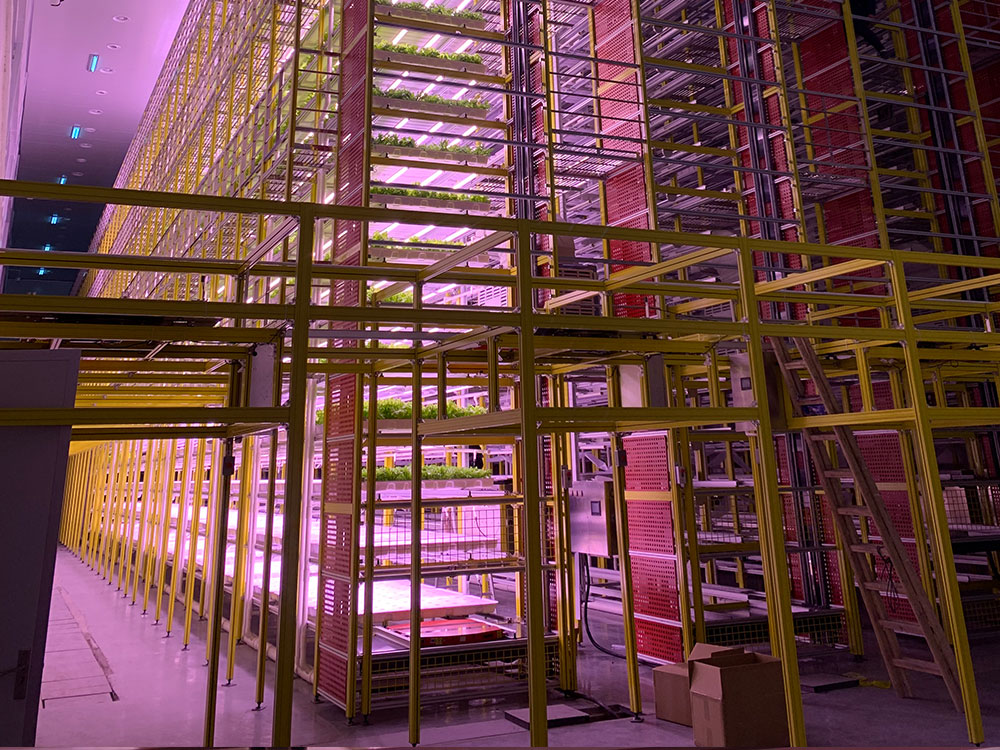
Traditional horizontal agriculture is increasingly constrained by soil degradation and unpredictable externalities. Vertical farming decouples crop production from land availability, utilizing vertical stacking to multiply output per square meter. However, the true value of a vertical farm lies not just in its geometry, but in its systemic integration.
Enterprises like LEAFYMAN (Shandong) Agriculture Technology Co., Ltd. have pivoted toward specialized leaf vegetable production technology, recognizing that different leafy greens require distinct hydrological and pneumatic environments. By integrating intelligent equipment manufacturing with agricultural science, modern facilities can now achieve year-round consistency, independent of seasonal cycles.
Technological Dimensions: DFT, NFT, and the Plant Factory Model
The efficiency of a vertical farm is fundamentally dictated by its irrigation and nutrient delivery systems. Analysis of current industry standards reveals three dominant paradigms:
Deep Flow Technique (DFT): Characterized by a high volume of nutrient solution, providing a significant thermal buffer and ensuring root stability. This is particularly effective for large-scale leaf vegetable production where systemic resilience is prioritized.
Nutrient Film Technique (NFT): A precision-focused approach where a thin film of nutrient-rich water flows over the roots. It maximizes oxygen exposure and is highly efficient in water consumption, though it requires rigorous monitoring of flow rates.
The Integrated Plant Factory: This represents the pinnacle of CEA, where light (LED spectra), temperature, humidity, and CO2 levels are orchestrated through automated systems. Data suggests that plant factories can reduce water usage by up to 95% compared to open-field farming, while simultaneously eliminating the need for chemical pesticides.
#VerticalFarming #AgTech #Hydroponics #PlantFactory #SustainableAgriculture
The Structural Transition of Agricultural Production
Traditional horizontal agriculture is increasingly constrained by soil degradation and unpredictable externalities. Vertical farming decouples crop production from land availability, utilizing vertical stacking to multiply output per square meter. However, the true value of a vertical farm lies not just in its geometry, but in its systemic integration.
Enterprises like LEAFYMAN (Shandong) Agriculture Technology Co., Ltd. have pivoted toward specialized leaf vegetable production technology, recognizing that different leafy greens require distinct hydrological and pneumatic environments. By integrating intelligent equipment manufacturing with agricultural science, modern facilities can now achieve year-round consistency, independent of seasonal cycles.
Technological Dimensions: DFT, NFT, and the Plant Factory Model
The efficiency of a vertical farm is fundamentally dictated by its irrigation and nutrient delivery systems. Analysis of current industry standards reveals three dominant paradigms:
Deep Flow Technique (DFT): Characterized by a high volume of nutrient solution, providing a significant thermal buffer and ensuring root stability. This is particularly effective for large-scale leaf vegetable production where systemic resilience is prioritized.
Nutrient Film Technique (NFT): A precision-focused approach where a thin film of nutrient-rich water flows over the roots. It maximizes oxygen exposure and is highly efficient in water consumption, though it requires rigorous monitoring of flow rates.
The Integrated Plant Factory: This represents the pinnacle of CEA, where light (LED spectra), temperature, humidity, and CO2 levels are orchestrated through automated systems. Data suggests that plant factories can reduce water usage by up to 95% compared to open-field farming, while simultaneously eliminating the need for chemical pesticides.
#VerticalFarming #AgTech #Hydroponics #PlantFactory #SustainableAgriculture