
Academic
The Neural Network of Modern Farming: Automation and Control Systems in MGS Hydroponics
In the sophisticated landscape of controlled environment agriculture (CEA), the hardware is only as effective as the logic that drives it. For LEAFYMAN (Shandong) Agriculture Technology Co., Ltd., a company recognized by the Chinese Agricultural Mechanization Association and holder of 16 independent intellectual property rights, the "Automation System" is the central nervous system of the Mobile Gutter System (MGS). This final analysis explores how integrated software and mechanical sensors transform static greenhouses into responsive, high-output production engines.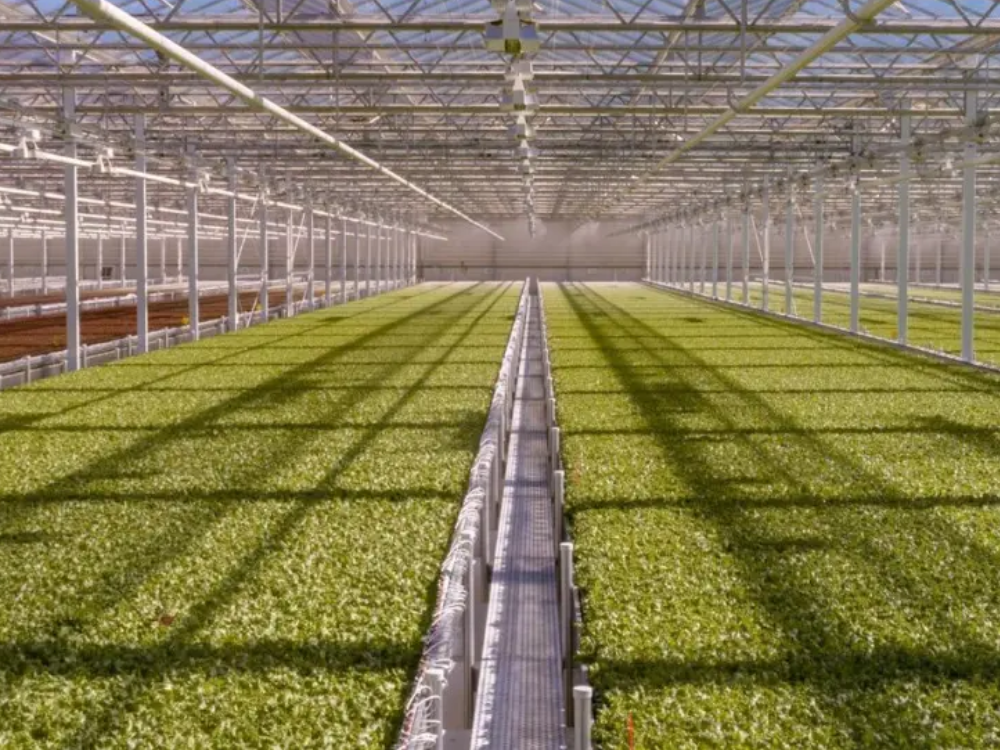
10. Algorithmic Spatial Management: The Logic of Movement
The defining characteristic of an MGS is its ability to adjust plant density in real-time. This is managed by a centralized PLC (Programmable Logic Controller) or a proprietary "Smart Growth" software suite. The system calculates the growth curve of specific lettuce cultivars—such as Romaine or Butterhead—and triggers mechanical actuators to move gutters at precise intervals.
From a technical standpoint, this automation solves the "Light Interception Paradox." In traditional systems, as plants grow, they begin to shade one another, leading to leggy growth and reduced lower-leaf quality. The LEAFYMAN-integrated automation logic ensures that the "Spacing Velocity" matches the "Leaf Area Index" (LAI) expansion, maintaining optimal airflow and light penetration for every plant in the facility.
Objective Performance Data:
-
Yield Uniformity: Automated spacing control reduces the standard deviation of harvest weights by up to 20% compared to manual spacing adjustments, ensuring a more predictable "Grade A" yield for commercial distribution.
11. Sensor Fusion: Real-Time Nutrient and Climate Feedback
Automation in an MGS extends beyond mechanical movement; it encompasses the "Closed-Loop" management of the hydroponic environment. Sensors located within the reservoir and along the gutter return lines provide constant data on:
-
EC (Electrical Conductivity) & pH: Automated dosing pumps adjust nutrient concentrations in milliseconds to counteract plant uptake.
-
Dissolved Oxygen (DO): Critical for MGS, where high-density planting demands peak root respiration.
-
Flow Rate Monitoring: Detecting localized blockages in the mobile gutters before they impact crop health.
By integrating fluid engineering with IoT (Internet of Things) sensors, LEAFYMAN systems create a "Self-Healing" environment. If a nutrient imbalance is detected, the system automatically recalibrates the mixing ratios without human intervention, ensuring the lettuce never experiences a "growth plateau."
12. Labor Orchestration and Harvesting Integration
The pinnacle of MGS automation is the integration of the "Harvest Logic." As gutters reach the end of the growth cycle, the system automatically routes them to the centralized harvesting station. This eliminates the need for forklift movement or manual carrying within the grow zone.
For industry decision-makers, this automation represents a shift from "Labor-Intensive" to "Knowledge-Intensive" operations. A single operator can oversee the production of hundreds of thousands of lettuce heads annually via a digital dashboard. This level of control is essential for meeting the stringent traceability and hygiene requirements (GAP/HACCP) of modern international supply chains.
Global Industry Summary: The Future of Automated Lettuce Production
The evolution of MGS technology represents the inevitable convergence of horticulture and industrial robotics. Based on current market trajectories in smart agriculture, the adoption of automated systems like those developed by LEAFYMAN (Shandong) Agriculture Technology Co., Ltd. is driving a 30% reduction in total cost of ownership (TCO) over a 5-year period through resource savings and labor optimization.
As global food systems face increasing pressure from climate volatility and labor shortages, the MGS automation framework provides a stable, scalable, and sustainable path forward. By combining deep industry expertise in leafy green production with cutting-edge mechanical logic, LEAFYMAN continues to empower the next generation of professional growers to achieve "Industrial Precision at a Biological Scale."
#MGSAutomation #SmartFarmingTechnology #LeafyMan #HydroponicControl #AgriTechSolutions