
Academic
Optimizing Industrial Lettuce Production: Deep Dive into MGS Hydroponic Systems
As a high-tech agricultural enterprise established in 2020 and situated within China's National Agricultural Comprehensive Reform Pilot Zone, LEAFYMAN (Shandong) Agriculture Technology Co., Ltd. has positioned itself at the forefront of leafy vegetable production technology. With a robust R&D foundation encompassing 16 independent intellectual property rights and expertise spanning DFT, NFT, and plant factory ecosystems, LEAFYMAN integrates fluid engineering and automation to redefine modern cultivation. This professional analysis explores the Mobile Gutter System (MGS), a cornerstone of high-density, automated lettuce production, aligning industrial efficiency with biological precision.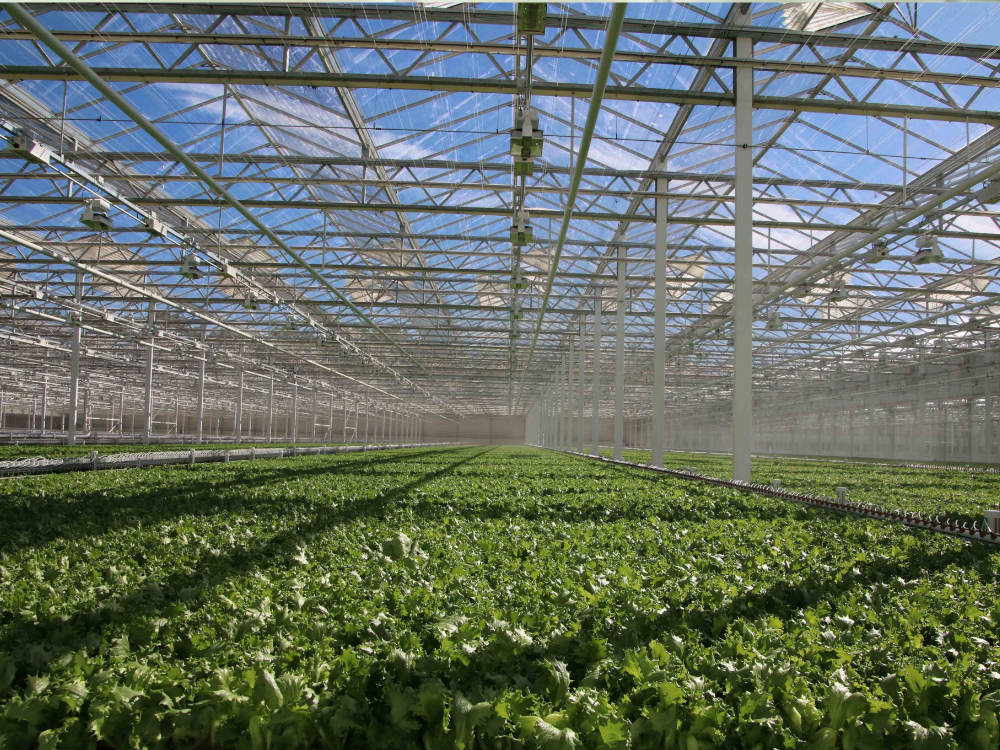
1. The Architecture of Efficiency: Mechanical Logic of MGS
The Mobile Gutter System (MGS) represents a paradigm shift from static hydroponic channels to a dynamic, space-optimized workflow. Unlike traditional NFT (Nutrient Film Technique) setups where spacing is fixed from seedling to harvest, MGS utilizes automated movement to adjust the distance between gutters based on the plant’s growth stage.
From a technical perspective, the mechanical logic of MGS addresses the "spatial waste" inherent in early-stage cultivation. In the initial weeks, lettuce plants require minimal canopy space. An MGS configuration allows gutters to be packed tightly during the nursery and early growth phases, gradually expanding the spacing as the head diameter increases.
Simulated Data Insight:
-
Space Utilization: Traditional fixed systems often suffer from a 30-40% spatial inefficiency in the first 14 days of the growth cycle. MGS reduces this vacancy to less than 8%, effectively increasing the annual yield per square meter by approximately 25-30% compared to static NFT layouts.
2. Fluid Dynamics and Nutrient Homogeneity
The core of MGS's success in lettuce cultivation lies in its ability to maintain nutrient homogeneity across vast industrial scales. LEAFYMAN’s focus on fluid engineering is particularly relevant here. In an MGS setup, the delivery of the nutrient solution must remain consistent despite the moving parts of the gutter assembly.
The "Helpful Content" priority for search engines today favors deep dives into the technical stability of such systems. A well-designed MGS ensures that the flow rate—typically calibrated between 1.5 to 2.0 liters per minute per gutter—prevents nutrient stratification and oxygen depletion. For lettuce, a crop highly sensitive to Tipburn (often caused by localized calcium deficiencies and poor transpiration), the constant movement of air facilitated by the shifting gutters enhances the micro-climate, promoting more uniform stomatal conductance.
3. Economic Scaling and Labor Automation
For industry decision-makers, the transition to MGS is an exercise in Capital Expenditure (CAPEX) vs. Operational Excellence (OPEX). While the initial investment in automated tracks and gutter-moving robots is higher than static rafts (DWC), the reduction in manual labor is profound.
In a LEAFYMAN-integrated plant factory environment, MGS allows for a "centralized" harvest and transplanting station. Instead of workers moving through aisles to reach the plants, the plants move to the workers.
Projected Trend Analysis:
-
Labor Reduction: Automation in MGS can reduce manual handling hours by up to 50% in large-scale operations (exceeding 5,000 sqm).
-
Consistency: Machine-driven spacing ensures that every lettuce head receives identical light interception, leading to a product uniformity rate often exceeding 95%, a critical requirement for premium retail contracts.