
Academic
The Engineering Backbone of Modern CEA: Strategic Analysis of MGS Mobile Rail Infrastructure
The Engineering Backbone of Modern CEA: Strategic Analysis of MGS Mobile Rail Infrastructure
In the highly competitive landscape of smart agriculture, the MGS Mobile Rail System serves as the mechanical "circulatory system" of the modern plant factory. LeafyMan, leveraging its expertise in automated engineering and fluid mechanics, has engineered a rail infrastructure that transcends simple movement. It is a sophisticated logistical framework designed to synchronize biological growth cycles with industrial throughput.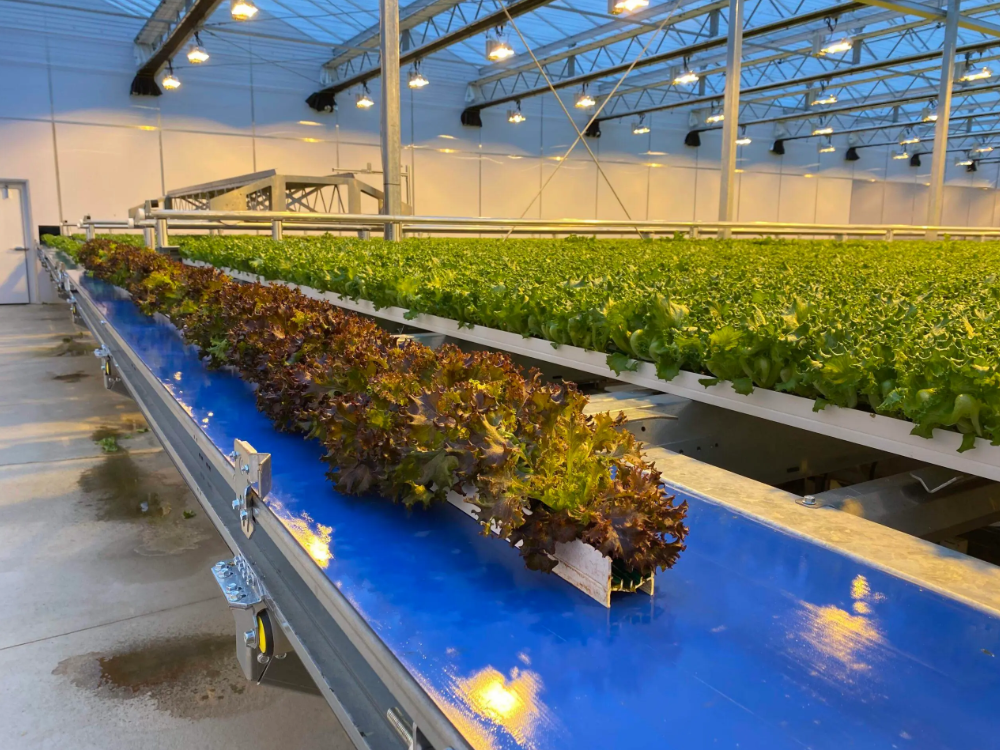
Dimension 4: Kinetic Precision and Structural Integrity of the Rail Matrix
The efficiency of an MGS is predicated on the seamless transition of gutters across the cultivation floor. LeafyMan’s rail systems are engineered to address the specific challenges of the greenhouse environment.
-
Anti-Corrosive High-Load Engineering: Operating in high-humidity (RH 70%+) and nutrient-rich environments requires specialized materials. Our rails utilize high-grade galvanized steel or customized aluminum alloys with anti-friction coatings. This ensures a low coefficient of friction, reducing the torque required by the drive motors and extending the system’s lifecycle to 10-15 years with minimal maintenance.
-
Micron-Level Alignment: For automated transplanting and harvesting robots to interface with the gutters, the rail alignment must be flawless. LeafyMan utilizes laser-guided calibration during installation to ensure that the "Moving Gutter" maintains a deviation of less than $\pm 2mm$ over a 50-meter span. This precision is what enables the "One-Person Operation" philosophy to be realized through robotics.
Dimension 5: Intelligent Throughput Management (ITM) via Rail Logic
The mobile rail is not just a track; it is a physical data path. By integrating sensor arrays along the rail matrix, LeafyMan transforms the cultivation area into a dynamic grid.
-
Zonal Climate Synchronization: As gutters move along the rails, they pass through different "micro-climate zones." The rail logic is programmed to pace the movement of crops so they spend optimal durations in specific light intensities or CO2 concentrations. This "moving environment" ensures that the physiological age of every plant in a batch is identical upon reaching the harvest station.
-
Energy-Efficient Actuation: Unlike conveyor belts that run continuously, LeafyMan’s MGS rails employ "Asynchronous Pulse Movement." Motors only activate when a positional change is required by the growth algorithm, significantly reducing the facility's carbon footprint and operational electricity costs.
Dimension 6: Mitigating Mechanical Fatigue in High-Frequency Cycles
A common failure point in inferior MGS systems is the mechanical fatigue of the drive chain. LeafyMan’s solution involves:
-
Self-Lubricating Drive Nodes: Reducing manual maintenance hours for the sole operator.
-
Load-Balanced Rail Geometry: Distributing the weight of water-filled gutters (which can be substantial in DFT-integrated systems) evenly across the floor structure to prevent rail warping over time.
Global Summary & Industry Outlook
Based on public agricultural trends and LeafyMan’s proprietary data, the transition from static to mobile hydroponics is no longer a luxury but a necessity for commercial viability. The MGS system, supported by robust rail technology, solves the triple-constraint of land, labor, and lead-time.
As a leader in the Shandong National Agricultural Pilot Zone, LeafyMan (LEAFYMAN) continues to bridge the gap between traditional horticulture and industrial automation. For the 400+ professional companies we serve globally, the MGS is the engine of a predictable, scalable, and sustainable food future.
#Hydroponics #MGS_System #SmartAgriculture #LeafyMan #VerticalFarming