
Academic
Precision Automation in Controlled Environment Agriculture: A Technical Deep Dive into MGS Hydroponi
LeafyMan (Shandong) Agriculture Technology Co., Ltd., situated within a national-level agricultural comprehensive reform pilot zone, has emerged as a high-tech pioneer specializing in leafy vegetable production research and intelligent equipment manufacturing. Since its inception in 2020, LeafyMan has leveraged its robust R&D framework—comprising 16 intellectual property rights and 4 proprietary production processes—to redefine soil-less cultivation. Within the spectrum of modern Controlled Environment Agriculture (CEA), the MGS Hydroponic System (Moving Gutter System) represents the pinnacle of spatial efficiency and labor automation, transcending the limitations of traditional static NFT or DFT frameworks.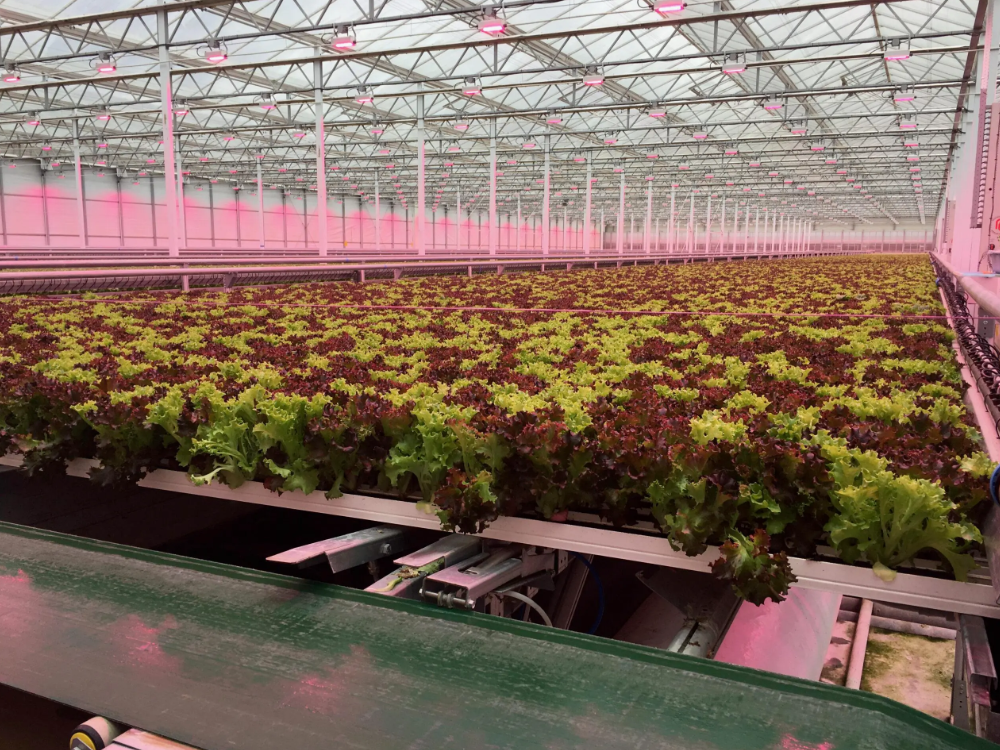
Dimension 1: Spatial Volumetric Optimization and Kinetic Crop Density
The primary constraint of traditional greenhouse farming is the fixed nature of planting benches, which necessitates permanent walkways for labor access. The MGS Hydroponic System disrupts this "static footprint" model through automated kinetic logistics.
-
Elimination of Non-Productive Aisles: By utilizing a motorized rail system that allows gutters to move laterally and longitudinally, the MGS architecture reclaims up to 30% of previously wasted walkway space. This increases the "Effective Cultivation Area" (ECA) significantly compared to fixed-bench systems.
-
Dynamic Spacing Strategy: One of the most sophisticated features of MGS is the ability to adjust gutter spacing according to the crop's growth stage. Seedlings can be placed in high-density proximity, and as the leaf canopy expands, the system automatically increases the gap between gutters. This ensures optimal Light Interception (LI) and airflow without manual intervention, maximizing biomass output per square meter per year.
Dimension 2: Fluid Dynamics and Rhizosphere Micro-Environment Control
LeafyMan’s interdisciplinary team of fluid and automation engineers has refined the MGS nutrient delivery mechanism to ensure physiological stability across thousands of individual plants.
-
Nutrient Film Uniformity: Unlike long-run NFT channels where nutrient depletion and temperature gradients can occur from the inlet to the outlet, MGS systems often employ shorter, modular gutter designs with precise flow rate sensors. This ensures that every plant, regardless of its position on the moving line, receives an identical concentration of Dissolved Oxygen (DO) and essential ions ($NO_3^-$, $K^+$, $PO_4^{3-}$).
-
Thermal Inertia and Root Resilience: By integrating elements of DFT (Deep Flow Technique) within the moving gutters, the MGS provides a thermal buffer. In the event of a power fluctuation or pump failure, the nutrient reservoir within each gutter maintains root hydration and temperature stability far longer than thin-film systems, drastically reducing the risk of crop loss in large-scale industrial operations.
Dimension 3: Operational Scalability and the "One-Person Operation" Philosophy
For enterprises like LeafyMan, the transition to MGS is not merely a biological upgrade but a logistical one. The system is designed to align with the "Industry 4.0" approach to farming.
-
Labor Decoupling: In a standard MGS facility, the "plants come to the people" rather than "people go to the plants." Harvesting, transplanting, and cleaning occur at fixed ergonomic stations. This centralized workflow allows a single operator to manage a facility size that would typically require a crew of five, fitting perfectly with the operational requirements of lean-staffed startups.
-
Data-Driven Yield Forecasting: Because every movement of the MGS is tracked via a central PLC (Programmable Logic Controller), farm managers can achieve 98% accuracy in harvest scheduling. This predictability is vital for fulfilling contracts with high-end retail chains and global food distributors, a sector where LeafyMan already supports over 400 professional planting companies worldwide.