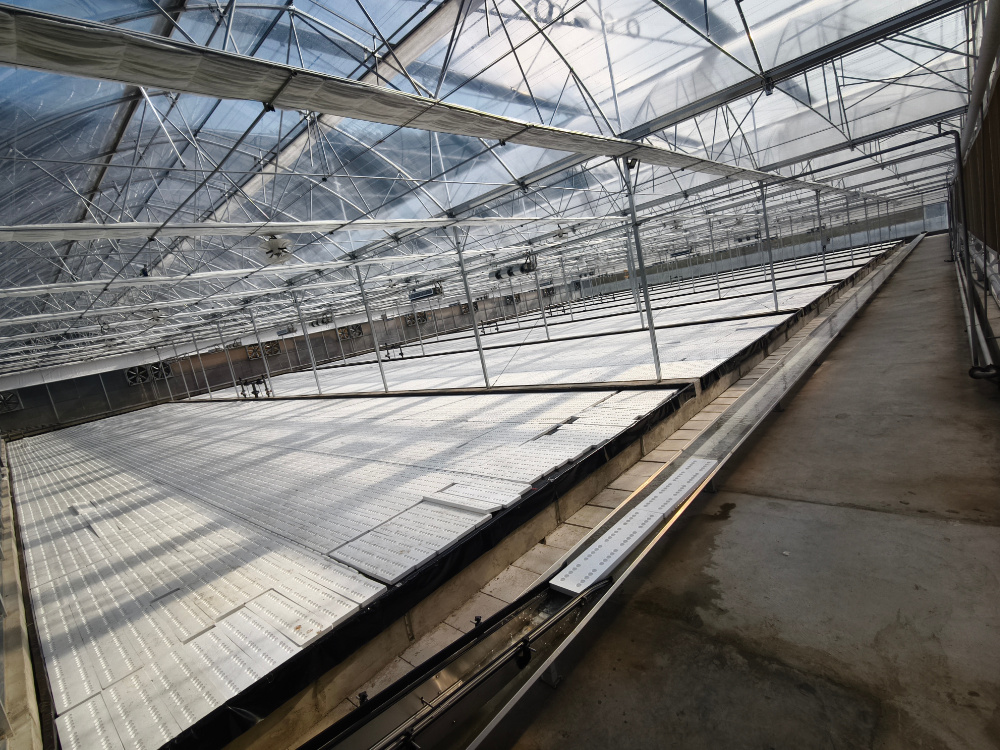
Hydroponic system
Fully automatic hydroponic lettuce
作者: 时间: 2026-02-09
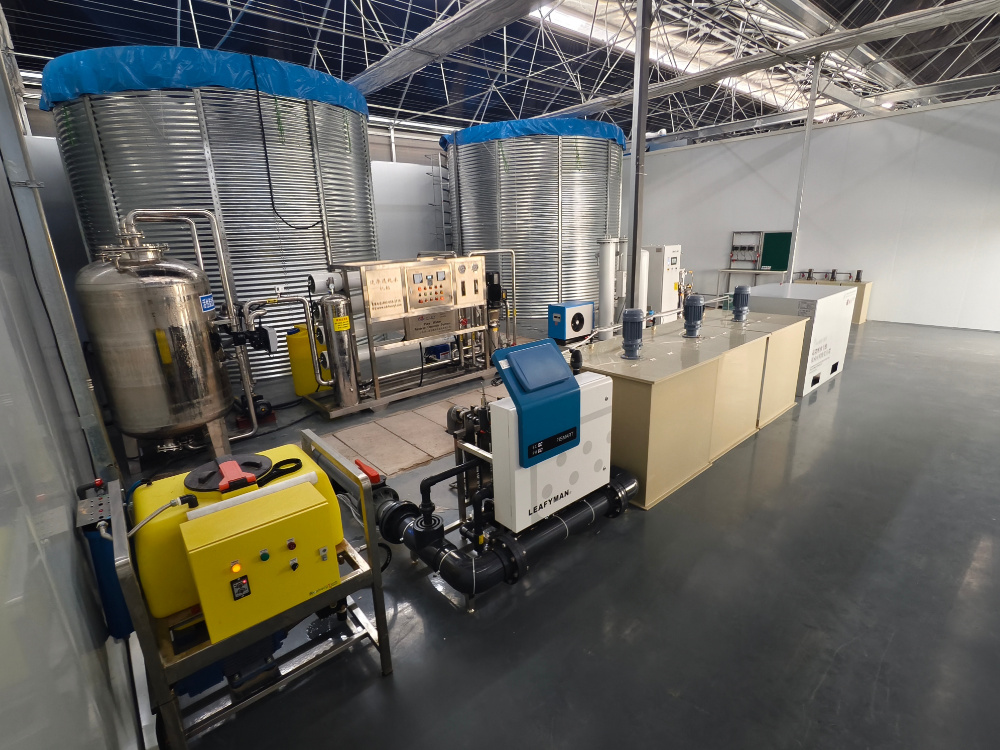
Geographical location: Lian, Dianjun District, Yichang City, Hubei Province, is one of the local smart agriculture demonstration projects.
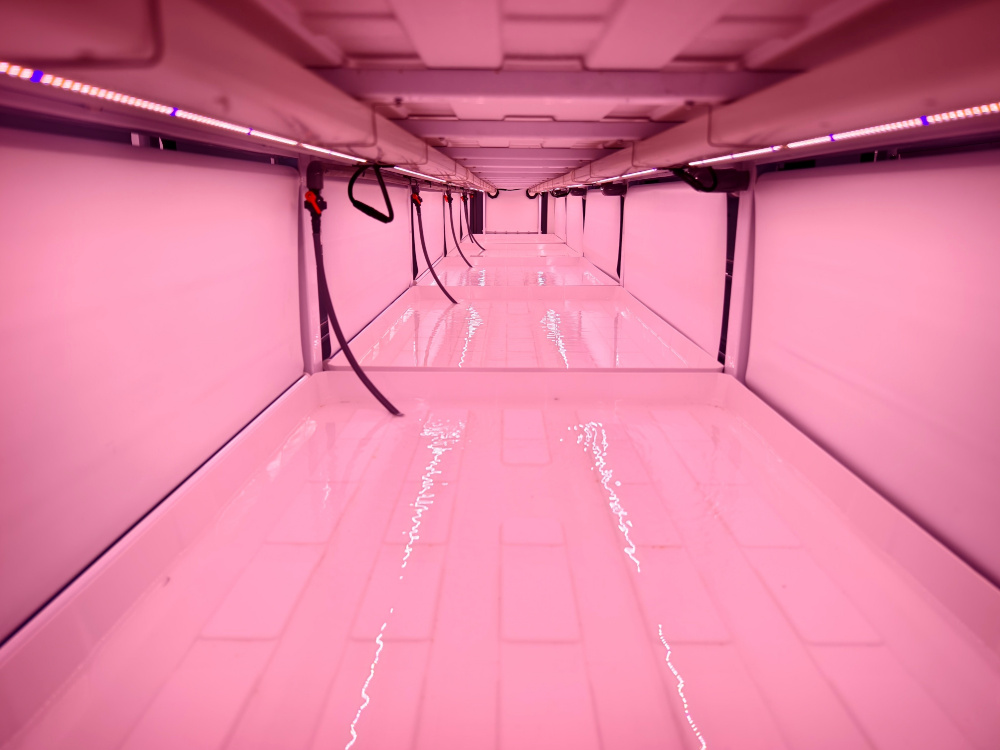
Core features: Utilizing an automated DFT deep flow floating hydroponic system to achieve industrialized and standardized production of leafy greens such as lettuce.
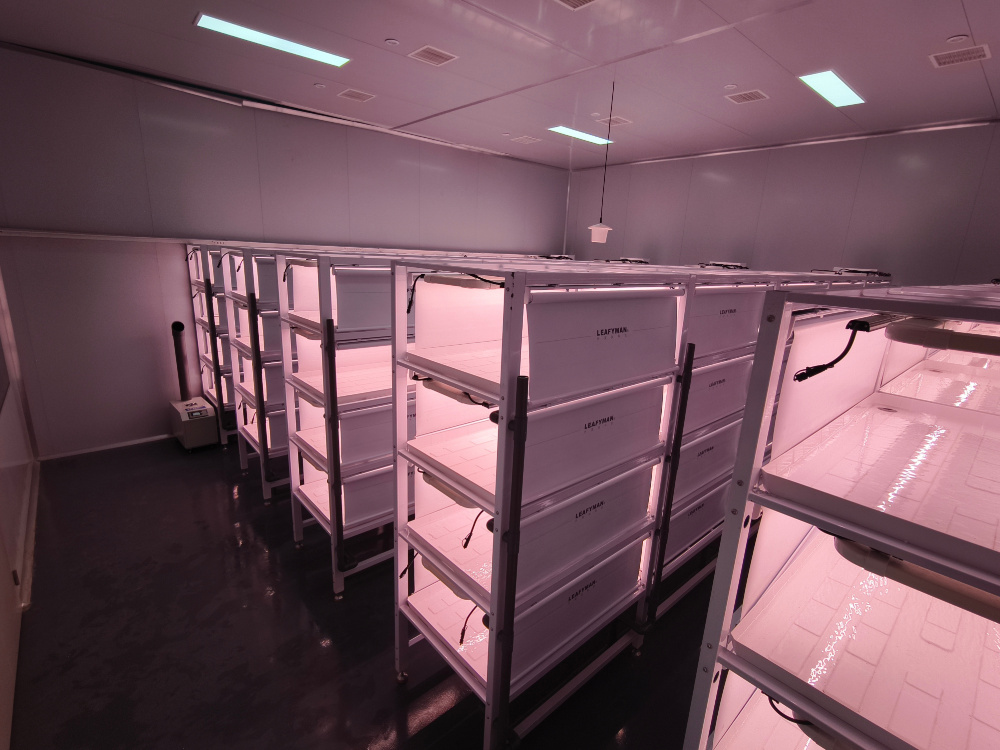
Functional layout: The project is planned to include a seedling cultivation area, a planting area, a packaging workshop, a cold storage, a warehouse, and equipment rooms, aiming to form a complete production chain from planting to sales
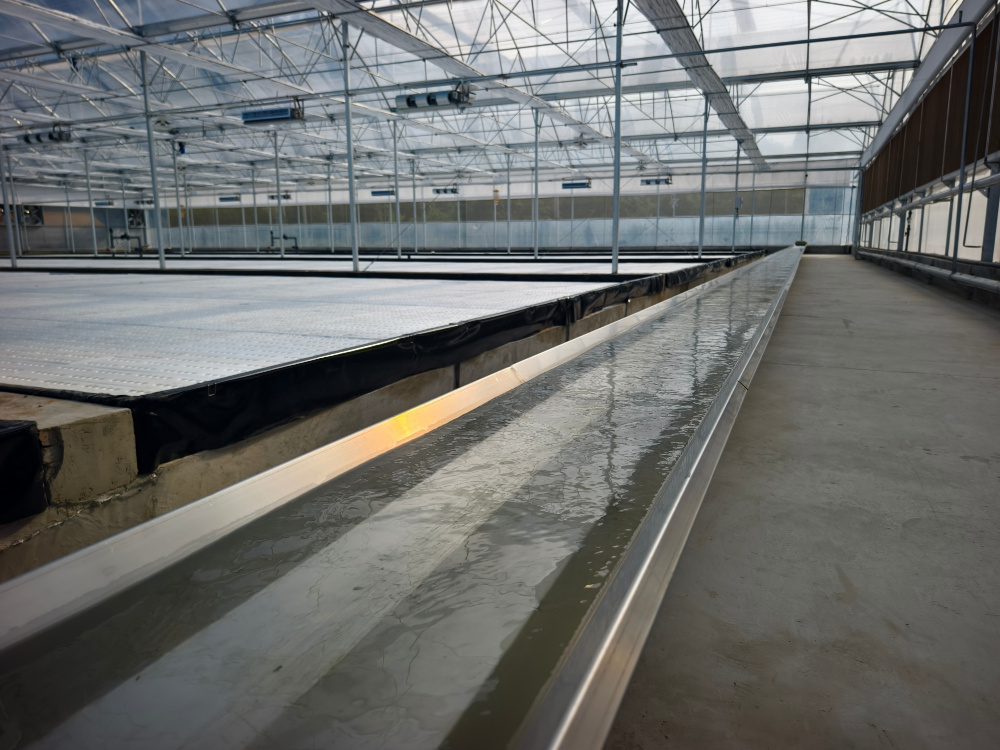
DFT (Deep Flow Technique) is a deep flow hydroponic technology, and its system composition and advantages are as follows:
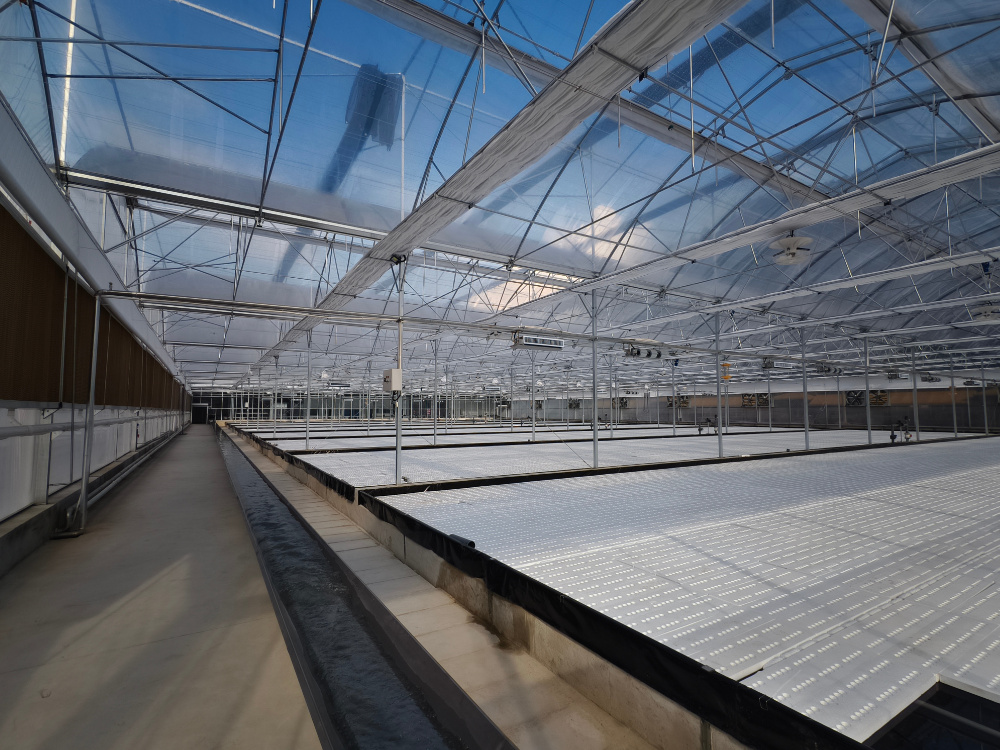
1. System composition
Cultivation pool: A channel or pool used to contain nutrient solution and plants.
Floating board: A foam board with fixed planting holes, used to secure the plant roots so that they hang down into the nutrient solution.
Storage tank: A container for storing and circulating nutrient solution, usually built underground to prevent algae growth.
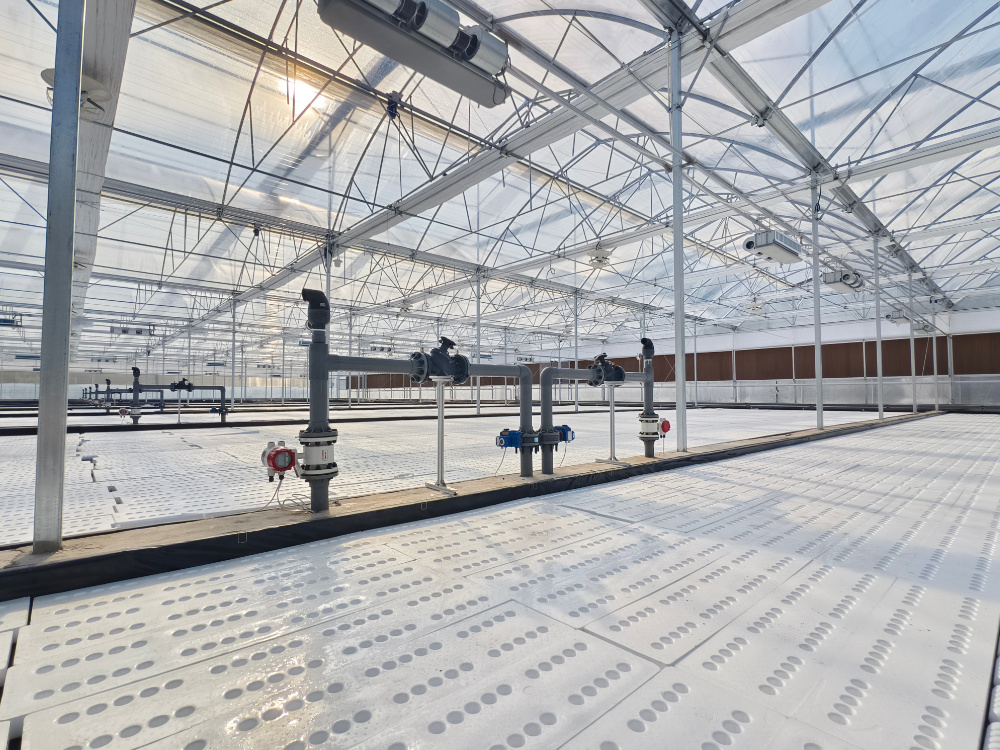
Fluid circulation system: Consisting of a water pump, pipes, and valves, it drives the nutrient solution to circulate within the system.
Oxygenation system: Supplement oxygen to the nutrient solution through an aeration pump or a venturi tube to prevent root hypoxia.
Irrigation and environmental control system: Automatically monitors and regulates the EC value, pH value, and temperature of nutrient solution, as well as the temperature, light, and humidity within the greenhouse.
2. Technological advantages
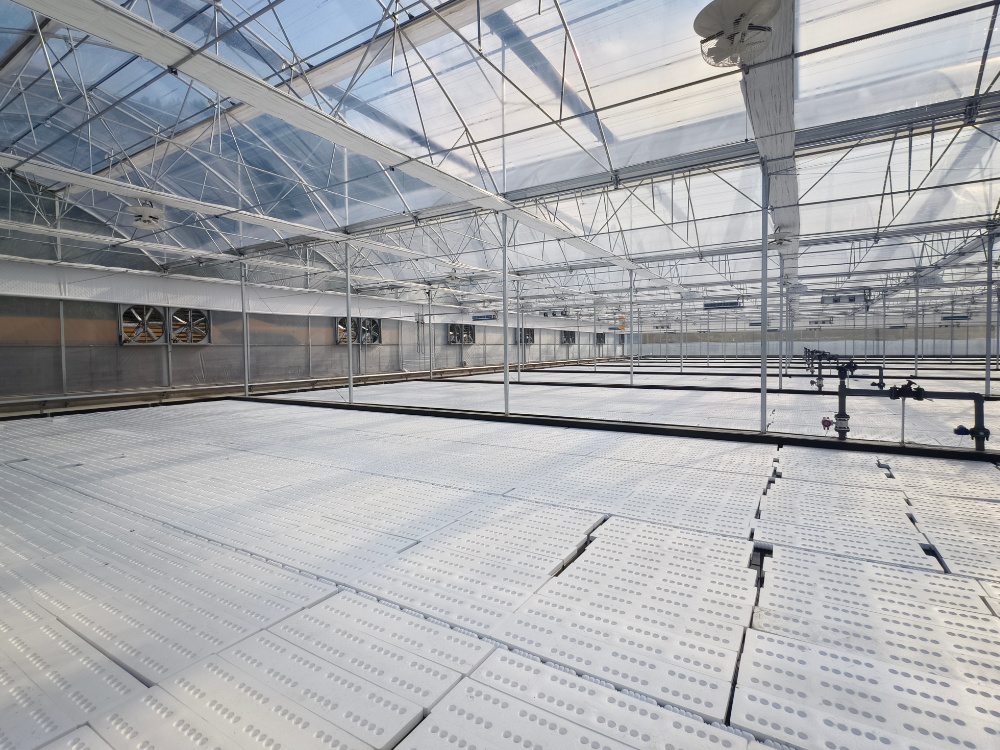
Environmental stability: The nutrient solution layer is relatively deep (typically 8-15cm), providing strong buffering capacity against external temperature fluctuations. It is suitable for year-round production in regions like Yichang, which experience cold winters and hot summers.
Robust root system: Most of the root system is immersed in nutrient solution, with sufficient oxygen, resulting in good growth potential and high yield.
Labor-saving and efficient: With the integration of automated equipment, it allows for operations with fewer or no personnel, making it ideal for large-scale leafy vegetable factories.